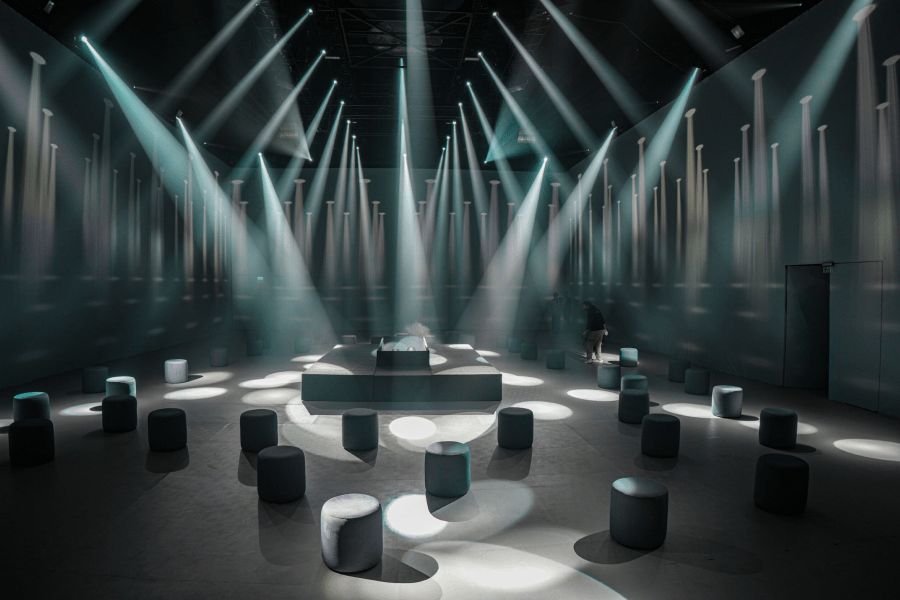
Taking place off-Broadway at 218 West 57th Street in New York, Masquerade is the immersive reworking of Andrew Lloyd Webber’s long-running musical The Phantom of the Opera.
Coverage in the mainstream press veered between cynical and hype, as theatre reviewers feared their beloved musical being turned into a theme park ride for audiences expecting a hybrid of Sleep No More and Universal’s Monsters Unchained.
But away from the media spotlight, would Masquerade meet the more exacting standards of the experience community? Would this simply be another ‘projection job’, with immersive tricks ladled on top of Lloyd Webber existing production – ‘experience-washing’, as it were. Tricks that might shift seats and merch but, with audience expectations of large-scale experiences rising as we speak, also might not.
We feared immersive tricks. What we got was a launch campaign built around a months-long ARG (Alternate Reality Game – a type of interactive storytelling where players solve puzzles in the real world using various media) that involved whispered voicemails, free ice cream, hacked merch, haunted newsstands, scrawled-on tarot and an blizzard of pop-up activity that proudly celebrated Manhattan with a knowing wink. Here was a launch campaign that gently and respectfully embraced the existing Phantom fandom and gave them the very best that the experience world had to offer.
It also shifted tickets, onboarding an existing community into the sometimes daunting world of experiential with passion, respect and excitement. Music to anyone’s ears.
What was it actually like? WXO veteran Michael Andersen experienced the whole thing first hand. Michael wrote about his experience over at ARGN.com, the long-running site where site owner Michael has been writing about the immersive space since 2007.
As part of our WXO Member Spotlight series, we’re delighted to reprint Michael’s original report here at WXO:
ARGN.com | Masquerade: NYC’s New Immersive Musical Launched With a Secret ARG
It’s the second night of Previews for Masquerade, and I’ve just finished seeing Andrew Lloyd Webber’s newest immersive musical take on Phantom of the Opera. While comparing notes with a friend from the NYC immersive community, a man dressed in black approaches. Leaning in conspiratorially, he quietly tells me: “You see? Everything I told you was true.”
The man who approached me was a ghost hunter named Sean Hunter, who was at the center of a months-long alternate reality game teasing the release of Masquerade. The musical just finished Previews with a gala event, last night. To celebrate, here’s an overview of how we got to the Masquerade.
The Masquerade ARG: A Popup Homage to New York City
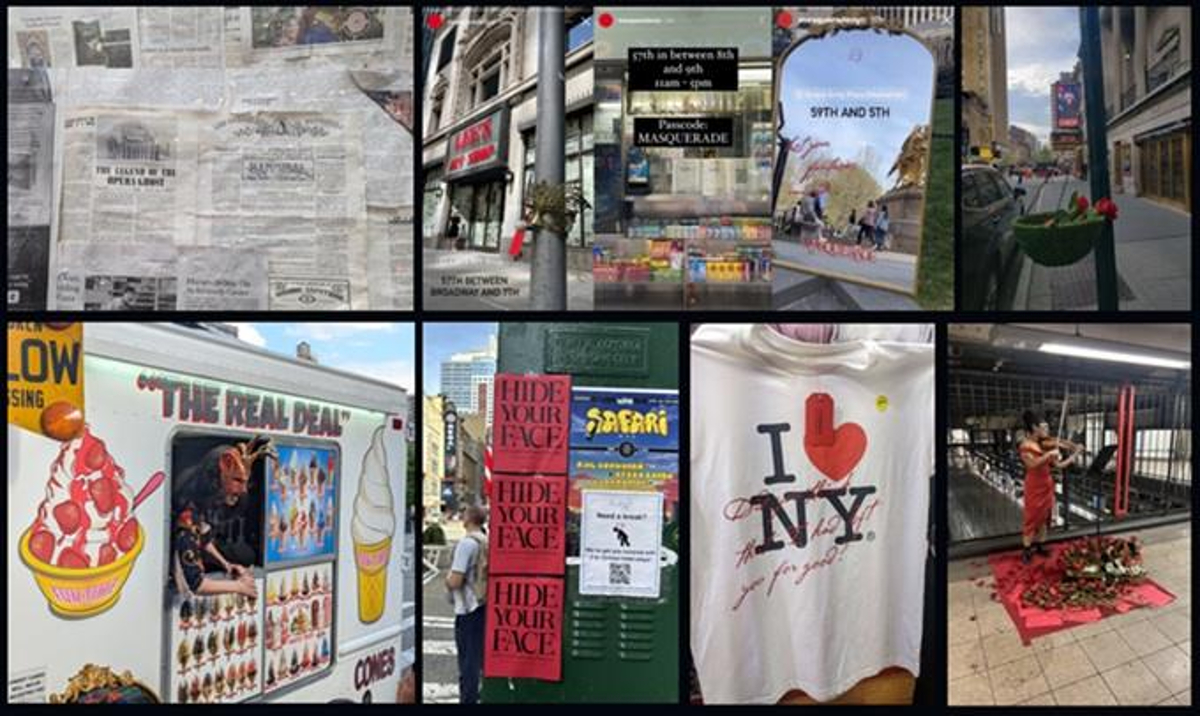
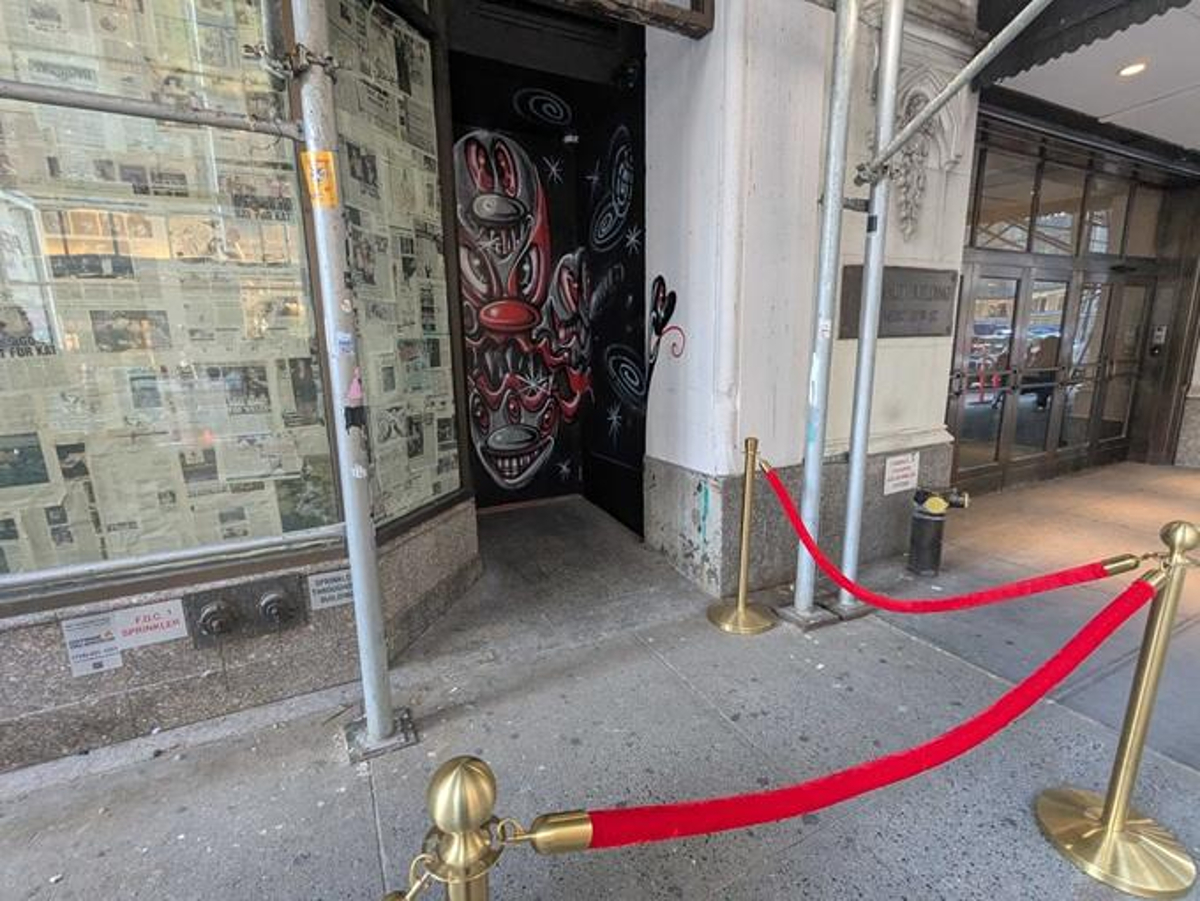
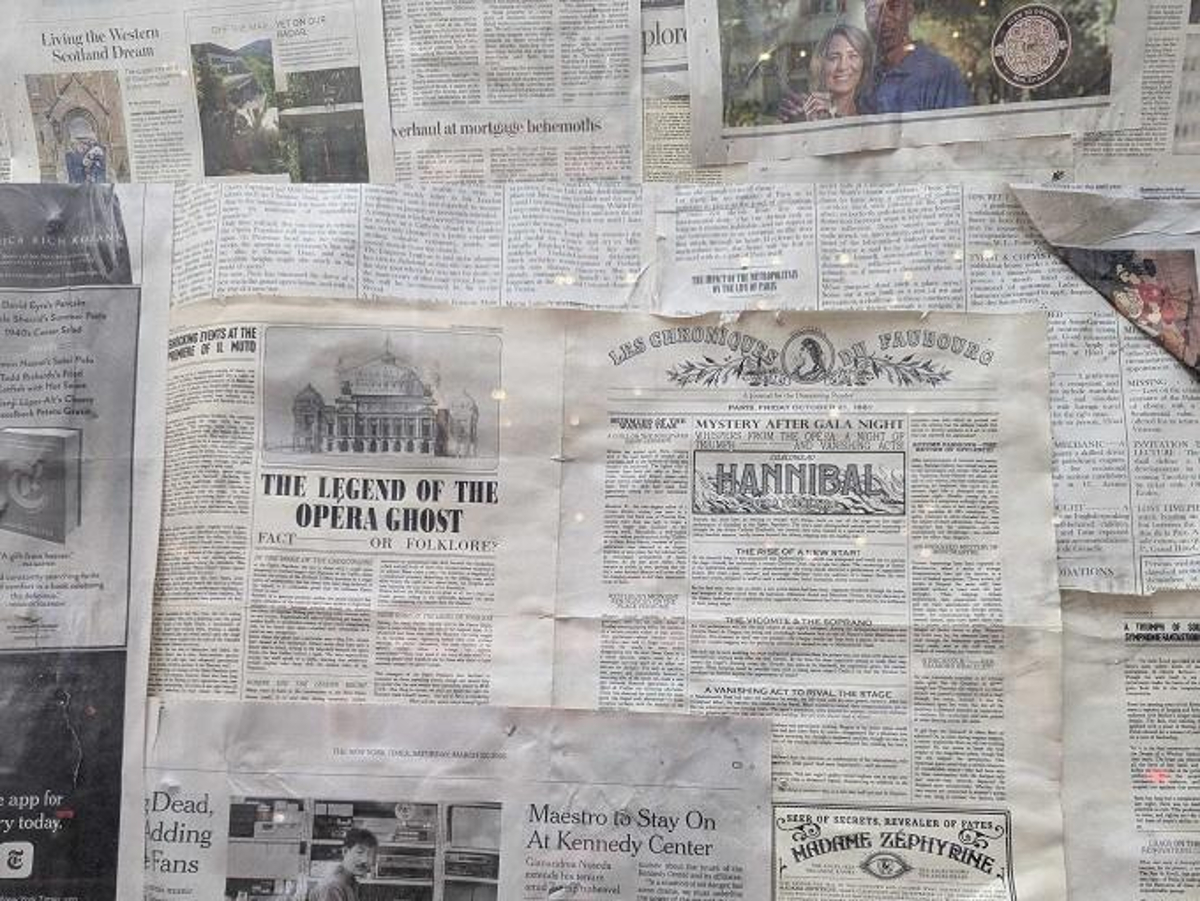
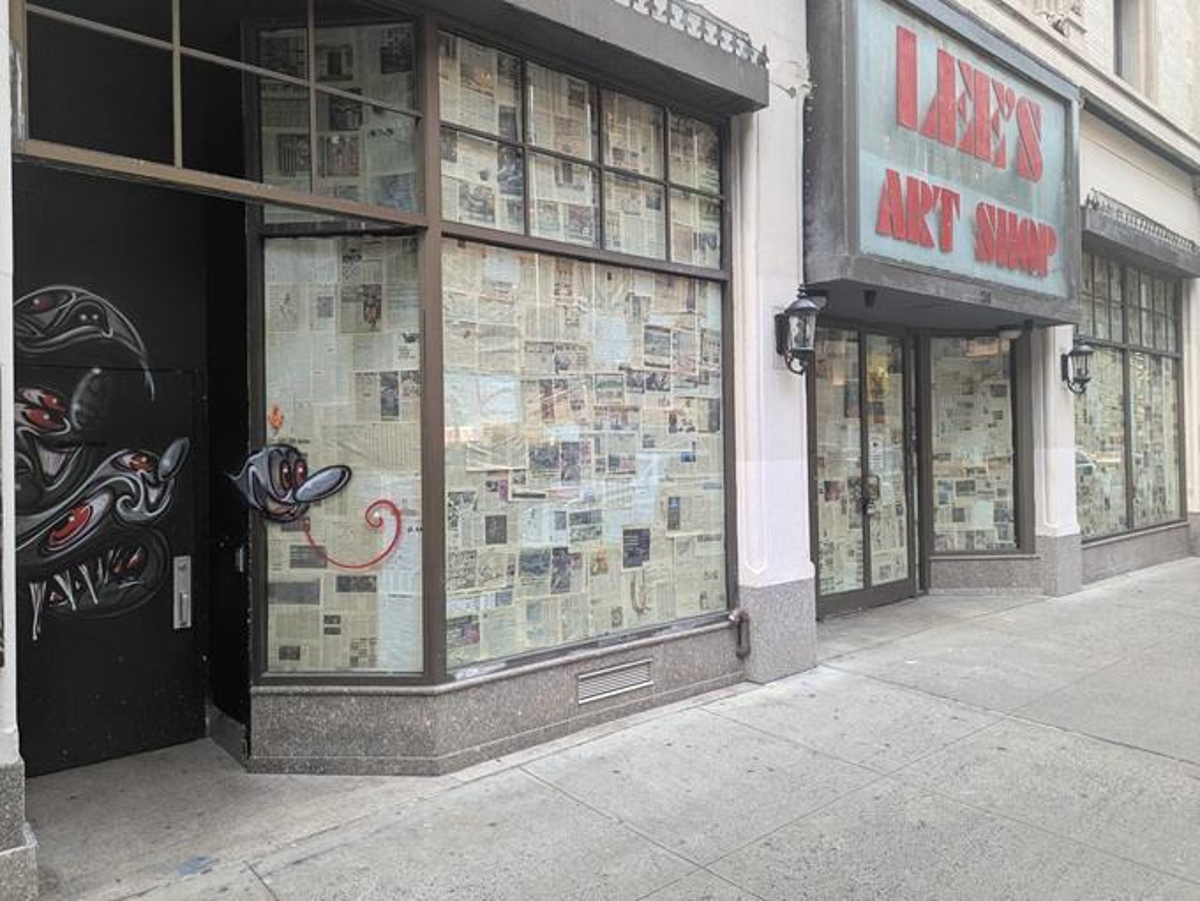
At its core, Masquerade teased the show’s existence with a series of popup experiences, celebrating New York City. As ARGNet previously reported, it started with the immersive show’s historic venue itself: to prepare for the show’s transformation, the windows of Lee’s Art Shop were liberally covered with newspapers. Upon closer inspection, however, many of these papers were referencing the history of Phantom of the Opera in New York City. And scattered in between the real papers from the city were a few in-universe papers about L’Opera Populaire.
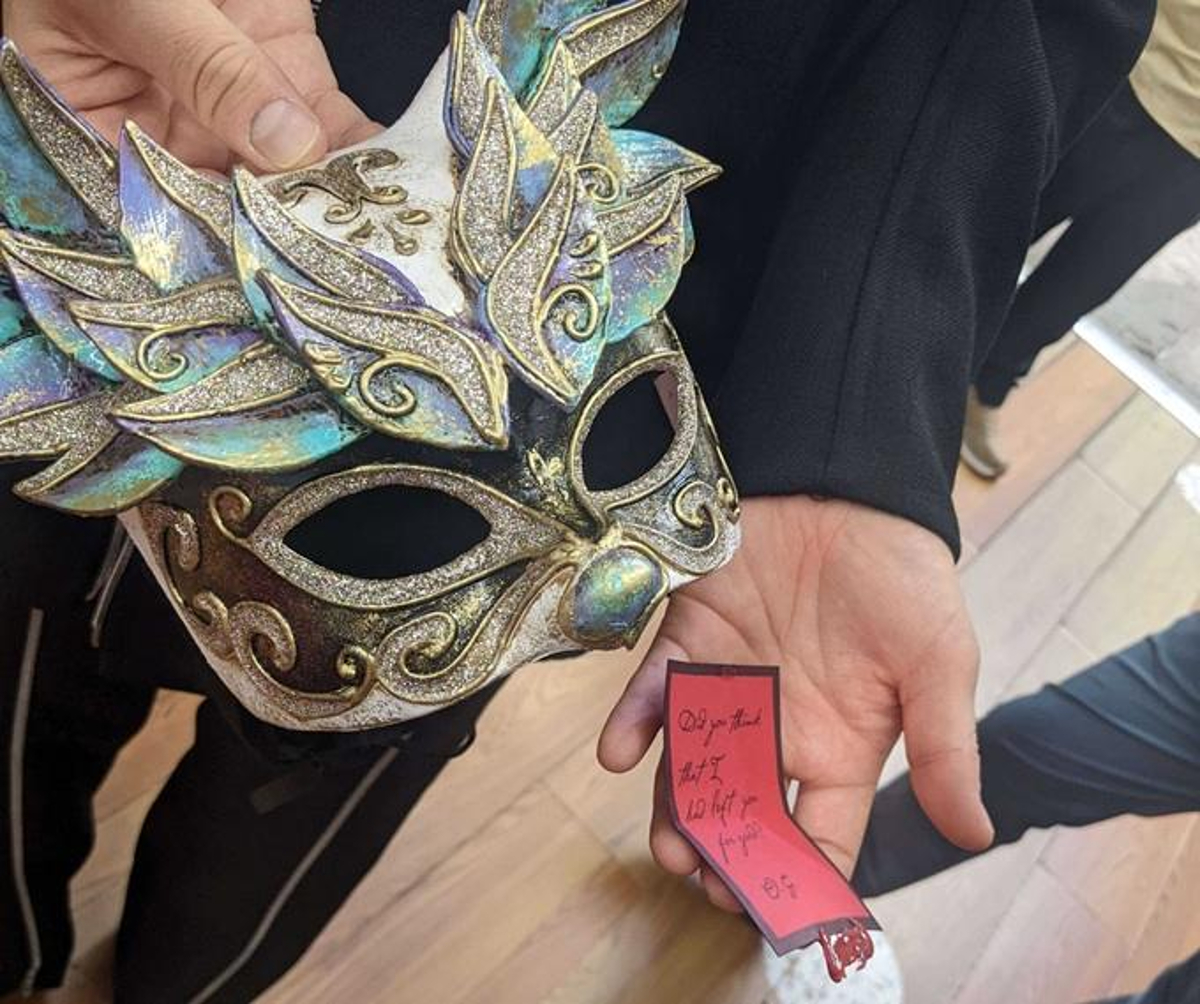
Shortly after fans noticed this detail, a series of masks started popping up at locations across the city, with luggage tags bearing MasqueradeNYC.com on one side, and the message “if found please call 212-505-5666”. Calling the number (now Masquerade‘s business line) would trigger a voicemail message featuring a music box playing the song Masquerade, slowly winding down before an ominous voice states “he’s back”. The following day, a series of mirrors with the Masqueradelogo appeared across the city. Each time, the MasqueradeNYC Instagram would post a story with a picture of where to go, for those curious enough (and quick enough) to find it. A full accounting of these events is listed below.
- Masks and Mirrors (April 20th): Six masks were left in front of key locations significant to the Phantom including Lee’s Art Shop, the Majestic Theater, and Christie’s Auction House. Shortly after, they’re joined by six mirrors.
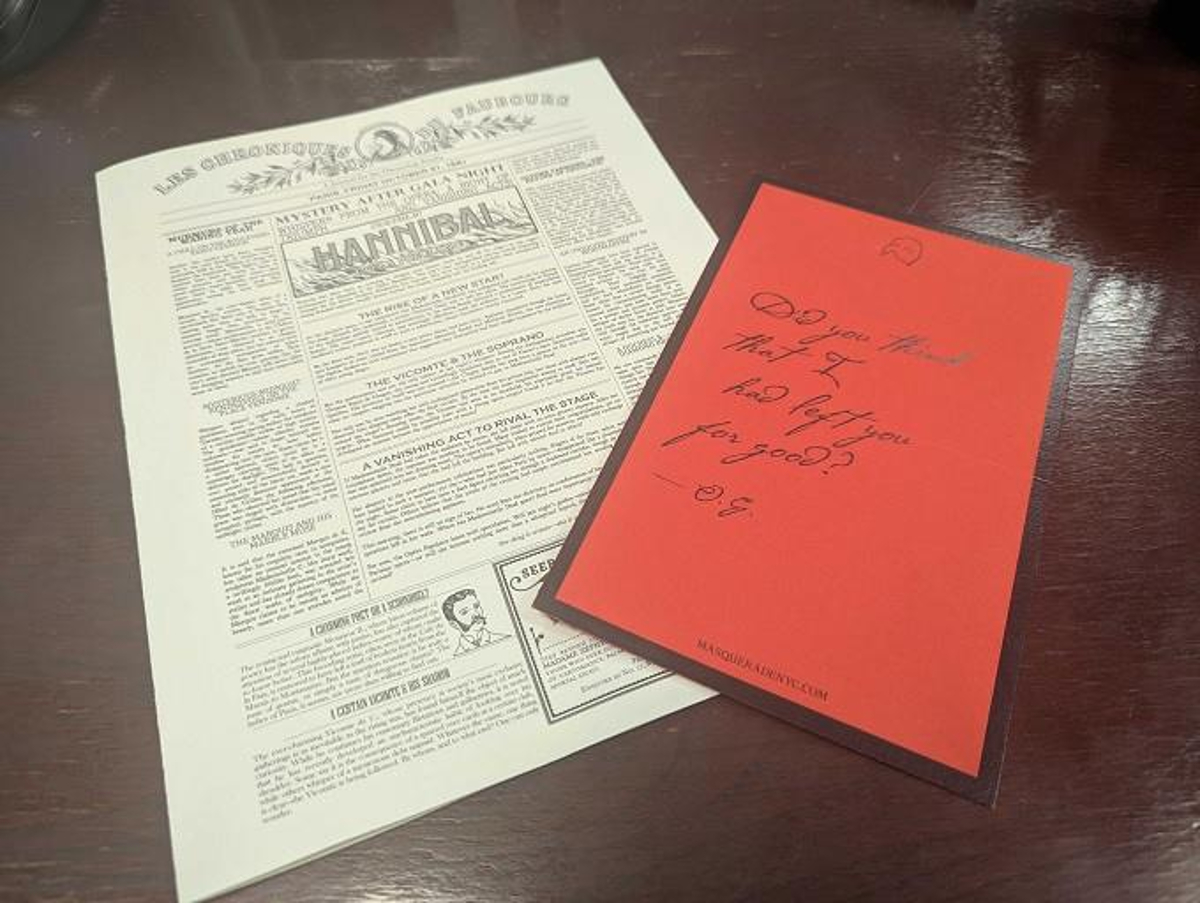
- Breaking News (April 23rd): Addresses for a series of newsstands across Manhattan were shared, with instructions to give the password “Masquerade”. In exchange, the shop attendant would hand over an in-universe newspaper from the 1880s, with a personalized letter from the Phantom tucked inside.
- A Bed of Roses (April 25th): This time, a series of Broadway theaters received a bed of roses attached to lampposts, tagged with the same luggage tags as the masks. Fans later realized that each of these theaters was home to one of director Diane Paulus’ prior shows, teasing her involvement in the musical before it was formally announced.
- Speakeasy Scratch-and-Win (April 26th): Once more, fans were directed to a newsstand…but this time, it was for a late night drop, starting at 10pm. Visitors ran into a masked woman in a jester costume, handing out scratch-and-win tickets in exchange for a password that offered newspapers, masks, and…something special that we’ll get to later, as prizes.
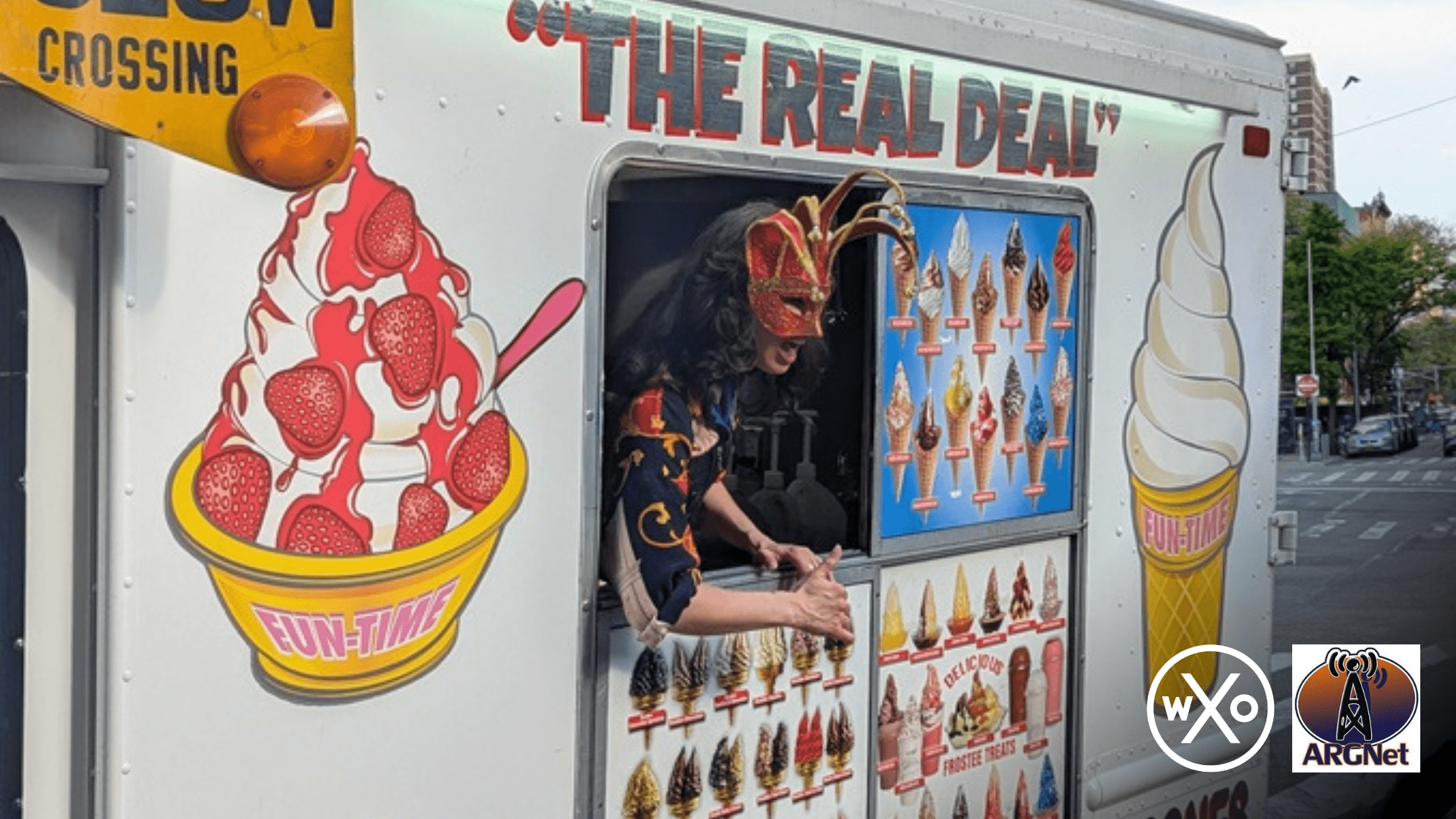
- Ice Cream Social (May 2nd): The same masked jester returned to take over an ice cream truck in Chinatown, giving out free cherry-dipped ice cream cones to fans with the right password…along with red napkins bearing the Masquerade logo on one side, and the music box phone number on the other.
- High End Haberdashery (May 11th): Next, a series of bold red signs started popping up across New York City, encouraging the curious to contact [email protected] to “Hide your face so the word will never find you”.
- Tourist Traps and Tshirts (May 15th): People who weren’t selected for fittings (again, more on that later) received an email telling them their consolation prize was waiting for them inside a souvenir shop in Tribeca. After providing the correct password, they received an “I Love NYC” shirt with the message “Did you think that I had left you for good” scrawled over it in red.
- Subway Serenade (May 23rd): This time the East Village deli location provided was only the start of the experience, as visitors were handed a Metro card and a map with the now familiar “Did you think that I had left you for good” message scrawled across it, along with a red mask over Union Square station. After taking the subway uptown and getting off the train, a haunting violin melody led fans to a masked woman performing music from Phantom of the Opera, with a bed of luggage tagged roses (and a pile of red sheet music) at her feet. This was the final public-facing event for quite some time…but not the last.
- Speakeasy Scratch-and-Win Reprise (September 27th): The night before Masquerade‘s gala launch event, the Masquerade Instagram reactivated once more, directing fans to yet another late night newsstand drop. This time, the jester was replaced by the same man who approached me after Masquerade, with another round of scratch-and-win tickets cleverly branded as “Lotto 666”. Most recipients won posters signed by Diane Paulus, although a select few won tickets to the opening night gala event.
Beyond creating spectacle, these popups offered up an understated celebration of New York City, by injecting magic into many of the cultural touchstones of Manhattan. From corner delis and souvenir shops to newsstands and subway street performers, the Masquerade ARG welcomed the Opera Ghost back to the city that was his home for so long. But these activations were only scratching the surface.
Joining an Opera Ghost Hunting Society: The Story Behind the Popups
Those of you who noticed a few gaps in that recounting of Masquerade’s popups and activations have probably already deduced that something more was going on…after all, there was barely any mention of that ghost hunter who greeted me during the show’s Previews. That’s because scattered throughout the experience were a number of chances to stumble deeper into the experience, and uncover a loose narrative tied together through a series of one-on-one encounters.
Before the Masquerade even started doing deaddrops, active members of the Phantom fandom started receiving deeply personalized letters from the Opera Ghost, complimenting them for their contributions in the space and welcoming them to the return of the Masquerade in an almost threatening manner. But the Masquerade ARG’s true narrative started in parallel with the popups.
It all started in the unofficial fan Discord. Emursive’s immersive theater production Life and Trust had just announced that April 19th would be its final show when Masquerade started its first round of deaddrops, and someone going by the username ghosthunter218 slipped into the newly created Masquerade Discord (as well as a few other immersive theater Discords) with a video insisting that they found something at Lee’s Art Shop. Those interested in investigating further were invited to email or DM him for details.
When approached, he would inquire about whether you believed in ghosts, before explaining, “I’ve stumbled across something remarkable. I want you to see what I’ve seen. 218 w 57th (the address for Lee’s Art Shop). I’ll send a time later.”
The Initial Ghost Hunting Expedition
In between the initial newsstand drop on April 23rd and the speakeasy scratch-and-win event on April 26th, select members of the community were instructed to meet outside Lee’s Art Shop late at night, where they were met by Sean Hunter in person to “sneak in” to the building under construction. Once inside, he fitted fellow ghost hunters with red headlamps to see in the otherwise dark building, before guiding them into the basement.
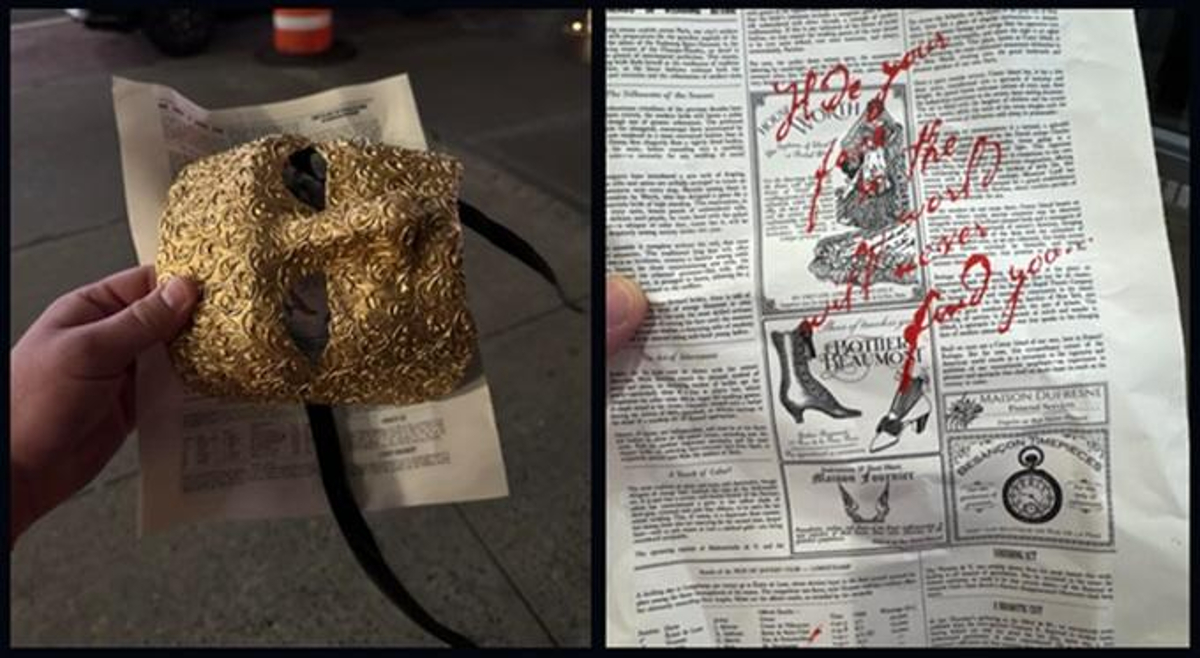
While heading down, he recounts the building’s history and mentions how he sometimes hears music coming from the basement. In the distance, a figure is seen fleeing, and a copy of the newspaper drops, marred by red text reading “Hide your face so the world can never find you.” This spooks (pun intended) Sean, and he hurriedly guides guests out…but not before a mask drops, leaving hunters with two souvenirs from their exploration of the haunted Art Shop.
While the emerging fan community got early access to this in-universe tour, the event served as an additional grand prize for a lucky few at the late night speakeasy scratch-and-win event. Winners were scheduled for their own run through the ghost hunting expedition later that night, with staggered times to allow more than a few people to see the full experience. This would soon become a pattern: certain activations would come with additional opportunities to stumble across a deeper layer to the ARG, coordinated on a tightly looped schedule.
A Brief Puzzling Interlude: A Musical Discovery in Lee’s
Thanks to my email correspondences with Sean Hunter I was initially scheduled to go on a ghost hunting expedition on April 27th, but my invitation was cancelled last minute, with the in-universe explanation that “they changed the locks…they’re trying to make me think i’m crazy. there’s gotta be a better way.”
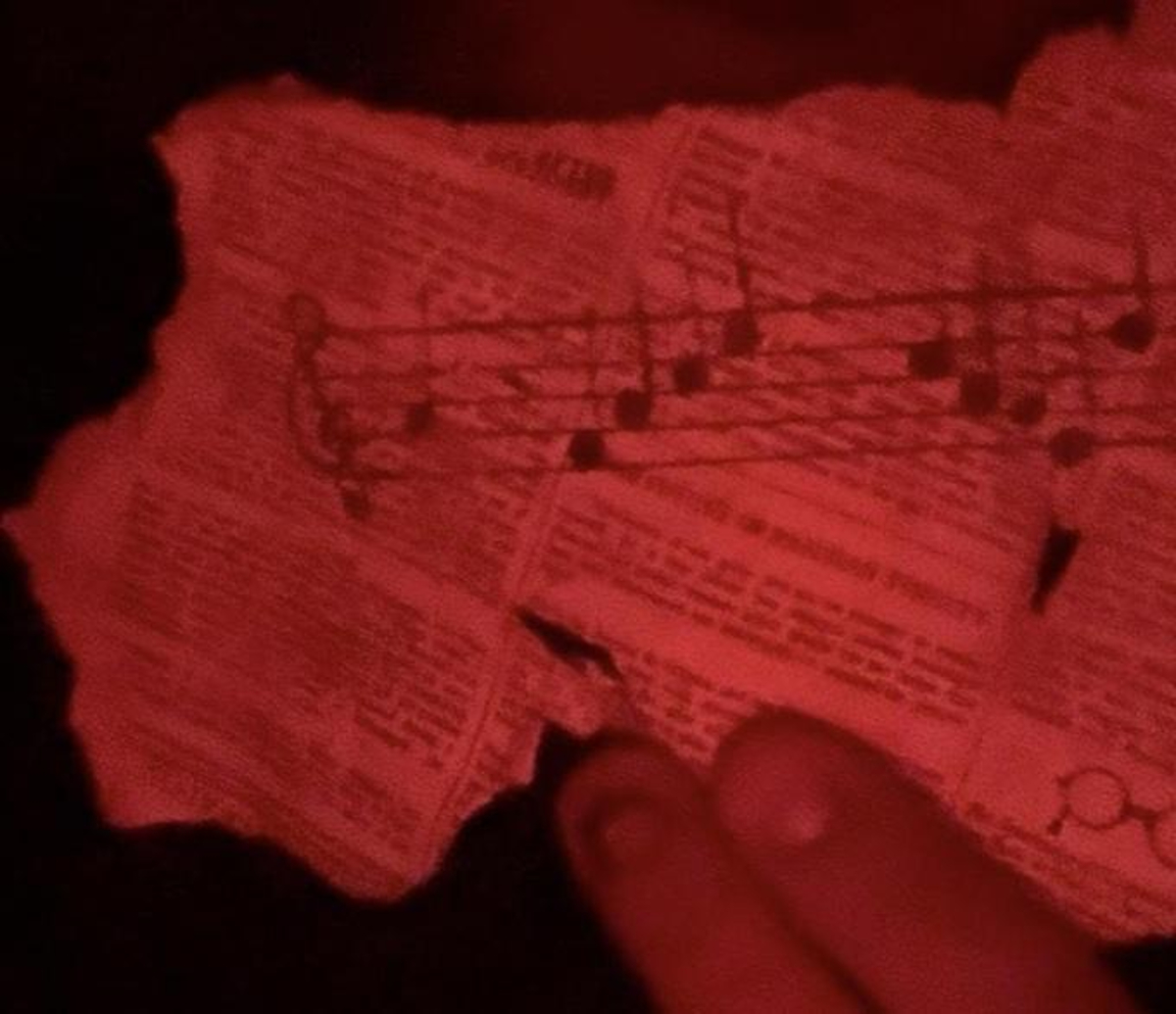
While I never got to go on the tour, I did receive a consolation prize of sorts: Sean followed up with a discovery from his own ventures, noting that “they tried to lock me out. they didn’t want us to see what’s in there. but this morning i found this in my bag…what even is this?”
Reading the musical notes, the message from the Phantom spelled out “A FACE CAGED”, which would end up being the first and only puzzle of the experience – proving that while alternate reality games often leverage puzzles as gating mechanism, they’re far from necessary for the format.
Madame Zephyrine’s Tarot Readings and the Return of the Ghost Hunter
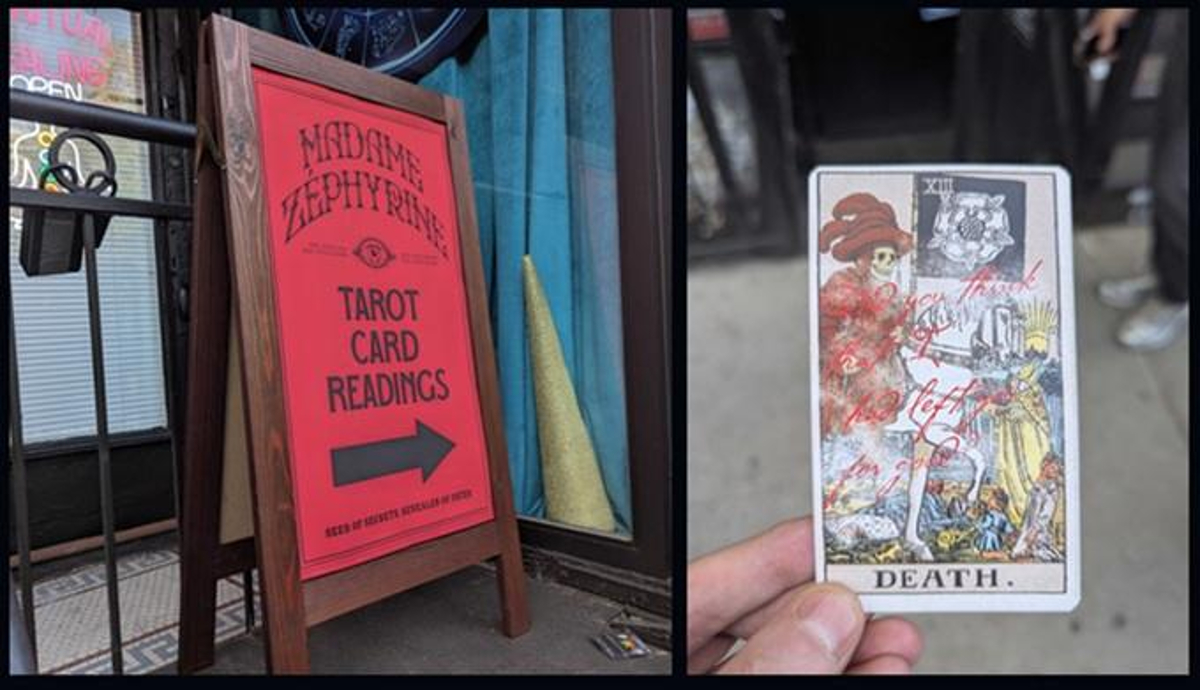
The next week during the ice cream social event, the masked woman in a jester costume would occasionally hand a customer a red envelope, telling them to proceed to an address a few blocks away, and knock on the door at a set time with a specific pattern. But when the door opened, it wasn’t the psychic: instead, Sean Hunter was standing there clutching a locket seeming somewhat dazed, before he bolted across the street in a rush.
Madame Zephyrine went on to give a three-card tarot reading, before the now-familiar music box music took over as the third and final card was pulled: a custom Death card with Death replaced by the Phantom’s Red Death costume. More tarot cards from this set would appear at last night’s gala event, as Madame Zephyrine returned for additional readings.
Yet again, while anyone who went to the event had the chance to receive a lucky red envelope inviting them to dive deeper, there was an alternate route in as well. One fan discovered a pair of eyeglasses perched on the ledge outside Lee’s Art Shop that matched the pair featured in the in-universe newspaper. After contacting Sean about the discovery, they were invited for an appointment with Madame Zephyrine.
Mask Fittings and Ominously Specific Measurements
While most applicants for custom fittings were rejected, a handful received instructions to show up at the souvenir shop that would double as the pickup location for custom I Love NYC tshirts. “Special guests”, however, would be given personalized passcodes alongside instructions to knock three times on a door in the back of the store. Yet again, Sean Hunter was waiting at the door to guide guests to the store’s second floor, for a personalized mask fitting with “the Maskmaker”.
Worryingly enough, while taking measurements for the mask, the only measurement The Maskmaker took is the customer’s neck, bringing to mind the Phantom’s penchant for using garottes on his victims. After taking down that number, the Maskmaker selected a mask from the wall and placed it on the face of his satisfied customer, as the music box starts to play once more. The experience closed out with a final photograph, sent personally to the mask’s recipient and later preserved on the Masquerade Instagram account.
The Fittings email would eventually be repurposed for an official line of couture masks, designed by Nicola Formichetti, who also designed masks for the show.
Summoning Circle: A “Majestic” Theatrical Finale
Each of the previous encounters were something that particularly brave or curious participants could stumble their way into: however, the finale was reserved for some of the most vocal fans. On June 2nd, Sean Hunter reached out to some of the more active creators documenting the experience, with a message: “i need to show you something. are you free tomorrow between 5pm-7:30…tell no one.”
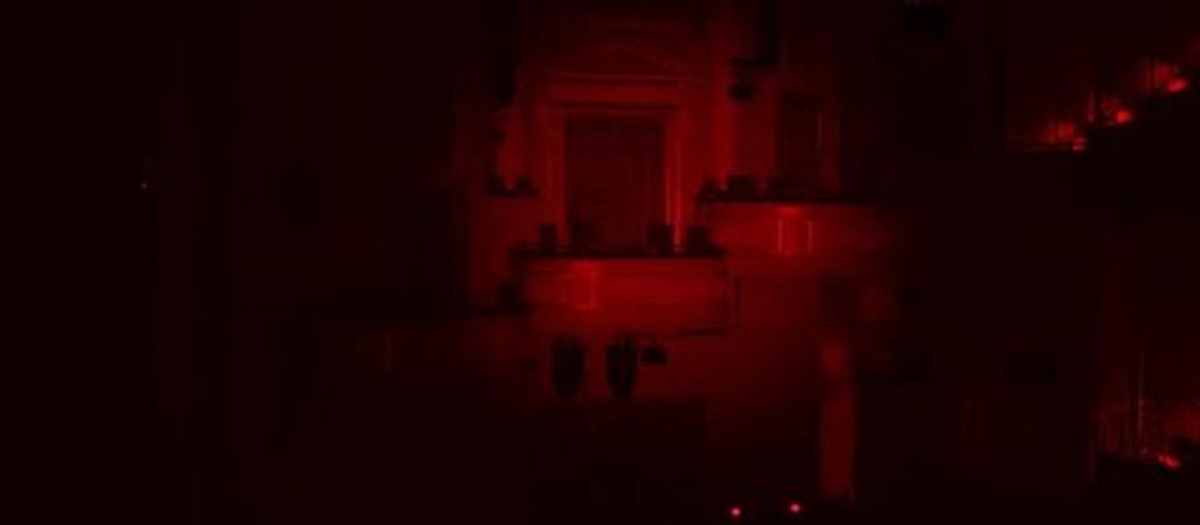
After confirming availability, they were invited to enter the Majestic Theatre (Phantom of the Opera‘s prior Broadway home) where Sean Hunter guides his solitary guest into an empty theater, lit only by their headlamps and the hauntingly red ghost light protecting the stage.
Upon entering Box 5 the guest is joined by Madame Zephyrine and the Maskmaker. The four sit in a circle and conduct a seance to help the Opera Ghost return. As part of the seance, the guest is handed a rose, a necklace affixed to a piece of the chandelier from L’Opera Populaire, and an elaborate mask.
Upon completion of the ceremony, a letter from the Opera Ghost falls at the guest’s feet and the Phantom appears at the other end of the stage, only to vanish once more with a flourish of his cape.
So, piecing together the clues from the ARG: the Opera Ghost was trying to come back, with vestiges of his former self surfacing – most frequently, through the music box that was so dear to him as a child, but also by adding messages to physical artifacts. Sean Hunter was investigating those appearances, and through the course of that journey he came across others looking to bring him back, with one final ritual. Evidently that ritual was successful, making the ARG’s players complicit in Erik’s return.
The Masquerade ARG: Promises Made, Promises Kept
Often, alternate reality games created to tease experiences are designed to make promises about the media property to come. When HBO used an alternate reality game to tease the first season of Game of Thrones, it was created to reassure ardent fans of the book that HBO was just as passionate about George RR Martin’s works as readers, by finding ways to showcase Westeros using all five senses. And when Dropout finally caved to fan pressure and made an ARG for the most recent season’s secret episode of Game Changer, it created an experience that stripped Sam Reich’s control of his own show, to set the stage for a secret episode intent on doing the same.
The Masquerade ARG made two promises about what to expect in the release of Masquerade. For Phantom fans, it promised the opportunity to step into a reverent tribute to L’Opera Populaire by paying tribute to Masquerade‘s place in history. This wasn’t just a tribute fictionally through the in-universe newspapers, it extended across the broader Broadway community by celebrating Diane Paulus’ body of work by creating a literal trail of roses through the theaters that housed her works, and even organizing for ARG’s final scene to take place bathed in ghost light at the theater that was home to the Phantom for so many years. Even the cultural significance of Lee’s Art Shop itself became a core feature of the ARG, with multiple narrative beats celebrating the history of the show’s new home.
For immersive theater fans, the Masquerade ARG promised that the show would be something that offered up moments of spectacle that put theatergoers in the middle of the action, while also providing the chance for personal interactions directed at you personally, rather than to a crowd of hundreds. The ARG was reassurance that the “immersive Phantom” moniker wasn’t just a marketing ploy.
Which brings us back to my earlier encounter with Sean Hunter. When he approached me, he said, “you see? Everything I told you was true.” And Sean was right. Not just because the Phantom actually was haunting Lee’s Art Shop, but because the production delivered on the promises its marketing made. In order to explain how, I’ll need to peel back the curtain and offer light spoilers about the structure of Masquerade as an immersive theater production, at least based on how it played out during Previews.
If you’d like to remain unspoiled about the show until you get a chance to see it, use the following photo of the newspapers that obscure Masquerade‘s interior at Lee’s Art Shop as excuse to stop reading.
Still here? Great. You’ve been warned.
Masquerade‘s Structure: A Dark Ride Musical
So, let’s talk about the show’s structure. At its core, Masquerade is still a musical, following a (largely) linear path through the narrative of Phantom of the Opera. But rather than having stage crew hurriedly rearrange a single set throughout the show, the audience itself moves through a series of rooms and follows the story, told primarily through the perspectives of the Phantom and Christine. No Proscenium typically refers to this style of show as a dark ride immersive, because of how audience experience is “on rails”.
To take full advantage of the space, every night audiences are divided into six “pulses” of 60 guests following a different Phantom and Christine pair for each pulse, offset by 15 minute increments. For the major musical numbers and moments of spectacle, the play resolves around those 60 guests, with cast members and performances flowing around and even within that crowd.
But every now and then, groups are split apart and enjoy a more intimate experience, in groups of around 20 guests. Sometimes those groups will continue to roam through the halls before converging, and other times they’ll be split off into a single room where the frenzied action comes to them. And it’s these more intimate groups where the promise of immersive theater is fulfilled.
Even in scenes where everyone in your pulse is in attendance, Masquerade offers the surreal experience of watching Broadway performances while being effectively closer than the front row of most plays. Most of the backing tracks may be prerecorded, but the singing itself is live and literally in your face, creating a surprisingly intimate environment. And thanks to Phantom’s show-within-a-show structure, you are often literally on stage with the cast and crew. And while some liberties were taken with the plot, these were almost universally true to broader Phantom lore, drawing on book, musical, and even film to adapt to the show’s immersive structure.
Masquerade‘s Intimacy: Building Magic in the Small Moments
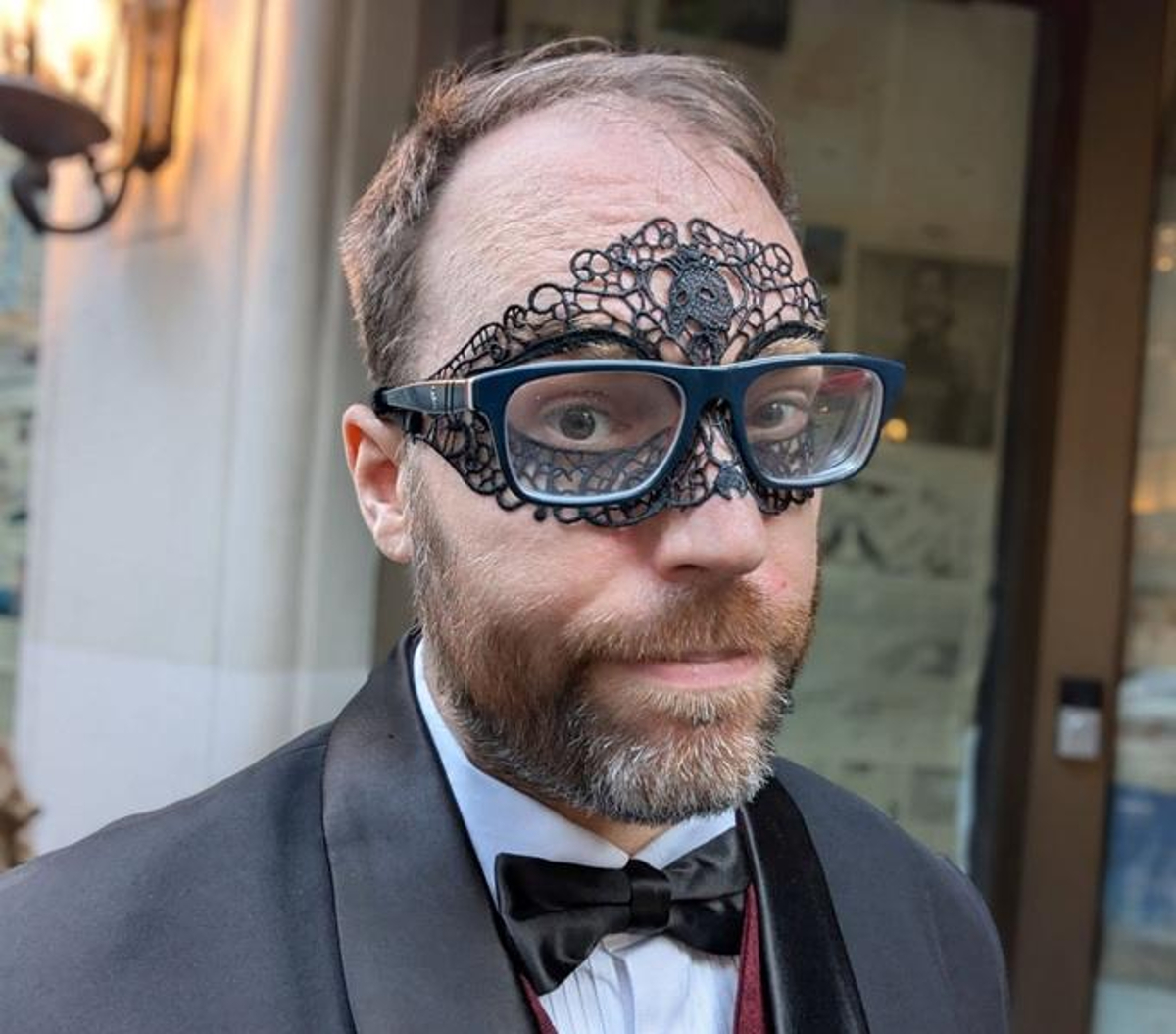
Every time Masquerade splits its audience into smaller groups, the show takes full advantage of the opportunity to make sure practically every guest leaves with a special moment that’s all their own. That might be a tangible thing, with the many letters that change hands over the course of the show finding their way into audience hands as souvenirs. Or it might be a little more physical. During a series of events taking place in L’Opera Populaire’s dressing room, which might be the immersive highlight of the entire performance, characters enlist audience members into all sorts of hijinks. Carlotta even sat on my lap, at one point.
As is often the case, however, the most powerful moments were the dozens of small encounters along the way where the cast recognized you as someone sharing the space with them. When the Managers spoke ill of the Opera Ghost, Christine’s whispered response wasn’t directed at a fellow cast member, it was directed at me. The show’s dramatic and heartfelt conclusion (which I will not spoil here) is perhaps the strongest example of this in action, bringing the story to a close in a way that could only work as an immersive performance.
To be clear, Masquerade attendees are there first and foremost as audience members, and little is asked of you. Masquerade is not a show that revels in Sleep No More‘s motto of “Fortune Favors the Bold” – indeed, it’s one of the few immersive shows I’ve experienced where courtesy and deference wasn’t treated as a moral failing.
A Layered ARG Launch for a Layered Show
Masquerade‘s alternate reality game worked on so many levels, making it one of my favorite ARGs I’ve personally experienced in years. The frequent popups and activations created compelling introductions to the Phantom’s immersive return to New York City even without further context…and further digging only heightened the anticipation, for Phantom and immersive fans alike.
Even more impressively, Masquerade seems to have delivered on all of the promises made by that advance campaign, creating a show that isn’t just a successor to Sleep No More‘s decades long run in the city: it’s a welcome evolution to the form that should be more approachable to the average theatergoer. And while the show is significantly pricier than most of its Broadway competitors for their cheapest tickets, it also delivers an experience that justifies the premium. Masquerade is a show where every “seat” feels like it’s the front row, while manufacturing dozens of moments that make you feel like it’s actually an audience of one.
For tickets to Masquerade, go to MasqueradeNYC.com. While most nights are 21+ (alcohol is served as part of the show, although non-alcoholic alternatives are also available), weekend matinee shows expand the age range to anyone 16+.
For personal perspectives on what it was like to play the ARG check out TheatreWithSelena and BroadwayBen on TikTok, as well as FlagBridge Designs on Instagram. Their ongoing coverage of the campaign was practically essential in following the ARG as it progressed, and captures a lot of the magic and excitement of experiencing it unfold in real time.
WXO Member Spotlight
About the author: Michael Andersen
Owner at ARGN.com, Cultural Intelligence Director at Simon & Schuster
Michael has been writing about the immersive space at ARGN.com since 2007. And while the site specializes in covering the world of alternate reality games, it has also provided early coverage of some of the mainstays of the immersive landscape including escape rooms, immersive theater, blockbuster Larps, brand activations, augmented reality games, serious games, museum and library exhibitions, puzzle hunts, and more.
Michael was previously Vice President-Director of Strategy & Analytics at Digitas Health, taught courses on Advertising at Villanova University’s Graduate School of Communications, helped launch WIRED.com’s Decode blog, and led Events for the MIT Mystery Hunt in 2024.