Lightsticks, meme flags and prepaid coffee helped citizens express identity, sustain participation and care for strangers. This is Experience Design IRL.
Experience design is usually presented as something professionals do for an audience.
A team creates an environment, decides how people should move through it and supplies the various objects or interactions intended to bring them together.
South Korea’s protests during the winter of 2024–25 offer a different model.
This Experience Briefing draws on a WXO Campfire with Jooseok Oh and distils its most useful ideas for experience leaders.
The most important tools were not developed by an agency or handed down by a central briefing. Instead citizens adapted objects, behaviours and relationships they already understood.
- K-pop lightsticks became symbols of democratic participation.
- Joke ‘meme flags’ made individual identities visible inside enormous crowds.
- Anonymous donors prepaid coffee and food for people they had never met.
This was experience design… from the audience.
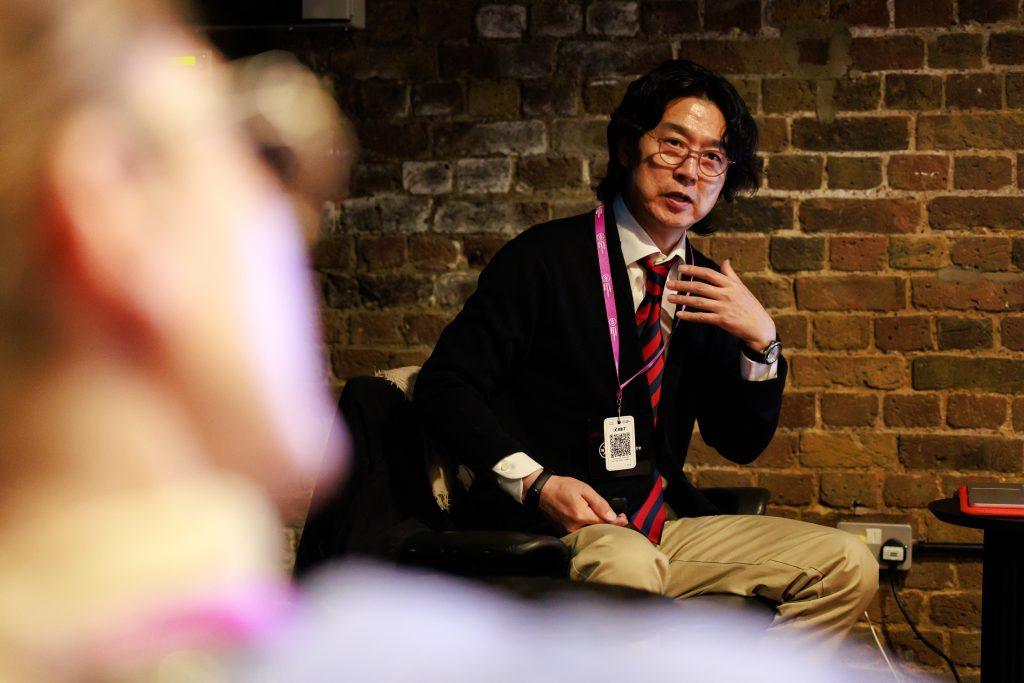
Jooseok Oh is the founder of BARAM Experience, a Seoul-based consultancy that connects brand, customer and employee experience. He describes himself as an Experience Orchestrator and has spent 30 years working across branding, marketing and organisational consulting.
Oh did not ‘design’ the protests. His contribution to WXO – and to London Experience Week 2026 where he first gave a version of this recent Campfire talk – is to interpret what happened in the 2024 protests as a Korean citizen and as a experience professional – and then turn that observation into a useful challenge for the industry.
His central argument is direct:
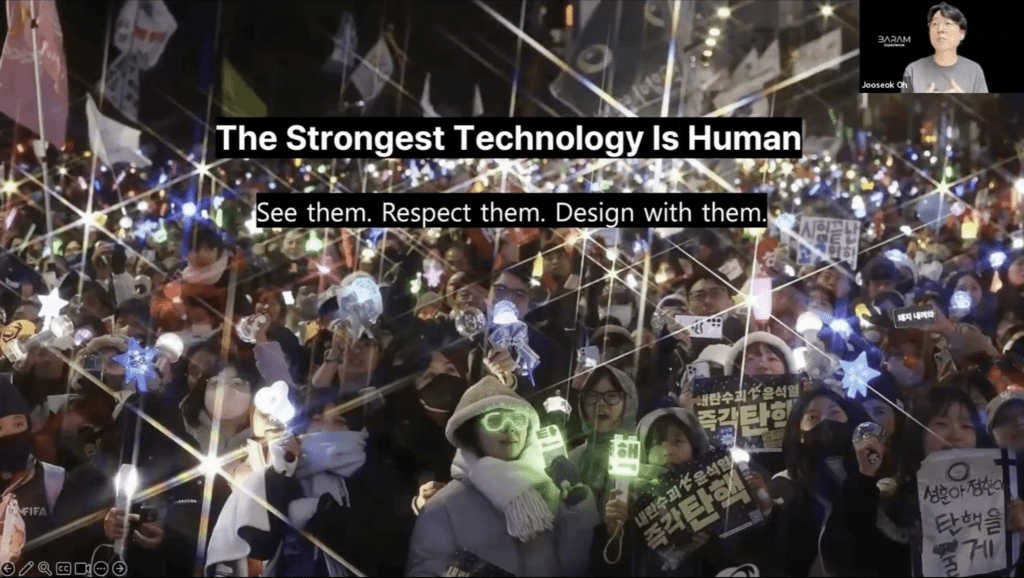
“The strongest technology is human.”

A political crisis became a civic stage
President Yoon Suk Yeol declared emergency martial law late on 3 December 2024. South Korea’s National Assembly voted to overturn it within hours.
The declaration began a period of sustained public protest. On 4 April 2025, the Constitutional Court unanimously upheld Yoon’s impeachment and removed him from office.
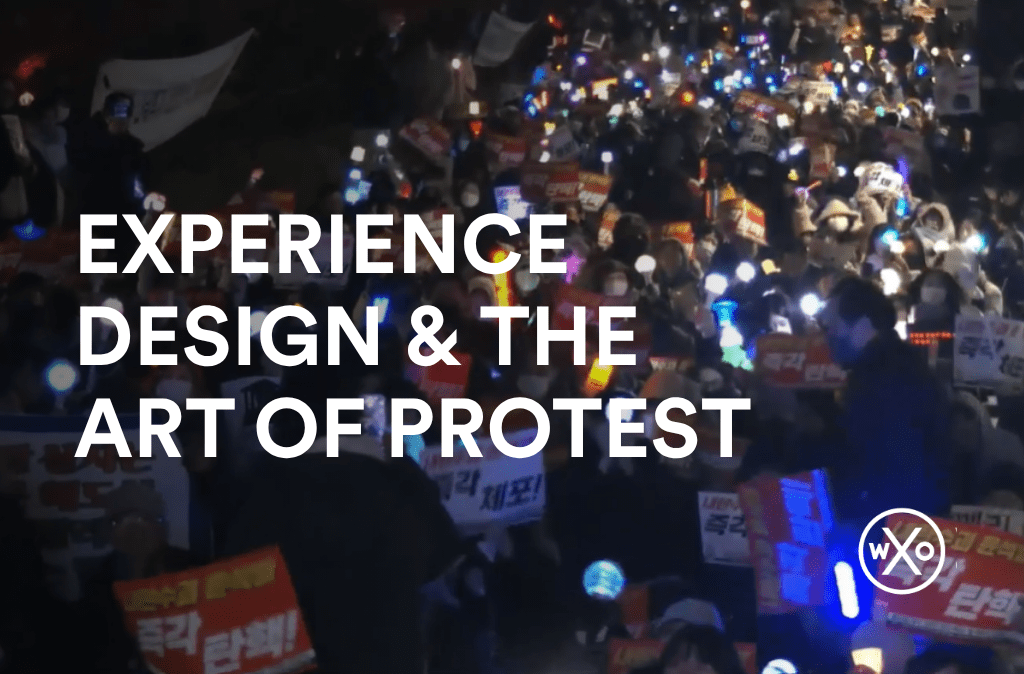
The December 2024 protests were remarkable in their striking visuals as much as their numbers. Huge crowds sang, danced and waved brightly coloured lights.
From a distance, they could resemble a K-pop concert or festival.
Oh makes clear that any such surface reading misses the seriousness of what was happening:
“To the world, it looked festive. To us, it felt urgent, collective, and deeply human.”
People were responding to a direct threat to their democratic system. The lightness of their methods did not make the situation less serious.
Humour, music and colour helped them face it.
The protests did not appear from nowhere
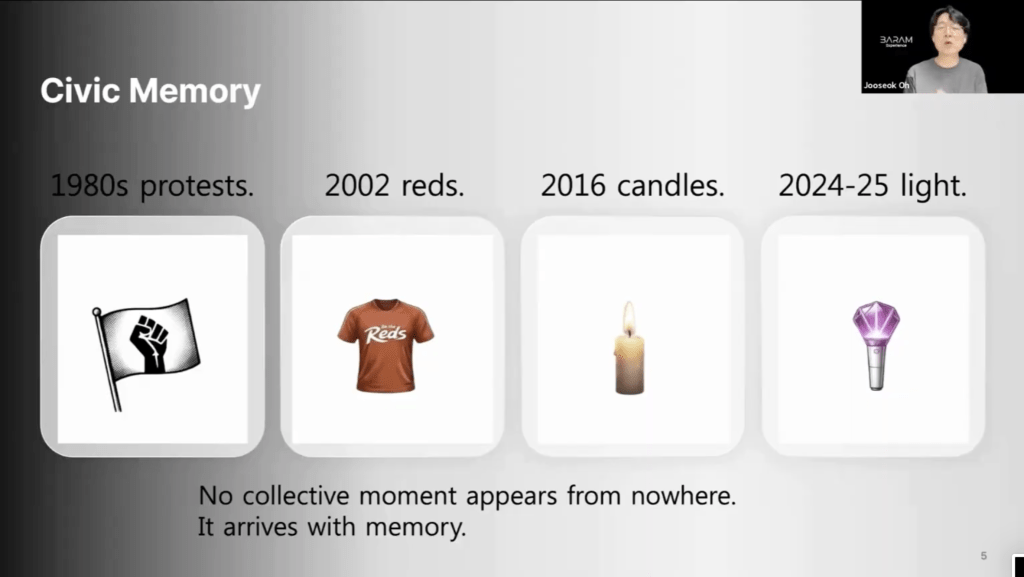
Oh places the events of December 2024 within a longer history of Korean public participation.
- The democratic protests of the 1980s established a tradition of citizens gathering in defence of their rights.
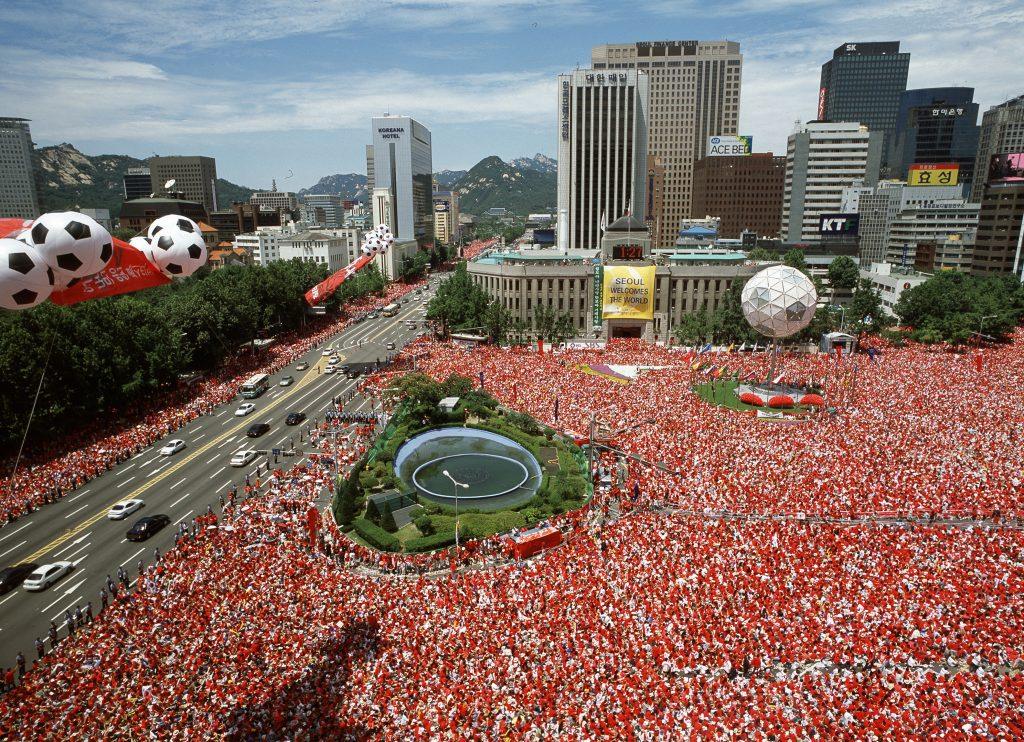
- During the 2002 FIFA World Cup, huge crowds dressed in red and gathered in public spaces to support the national team. Oh helped organise one of these large public gatherings in Seoul. The event demonstrated how rhythm, colour and shared behaviour could turn a crowd into a collective.
- In 2016 and 2017, candlelight demonstrations accompanied the impeachment of President Park Geun-hye.
“No collective moment appears from nowhere. It arrives with memory.”
In 2024, that candle became electric.
The lightsticks belonged to a new generation, but the act of gathering carried knowledge inherited from previous ones.
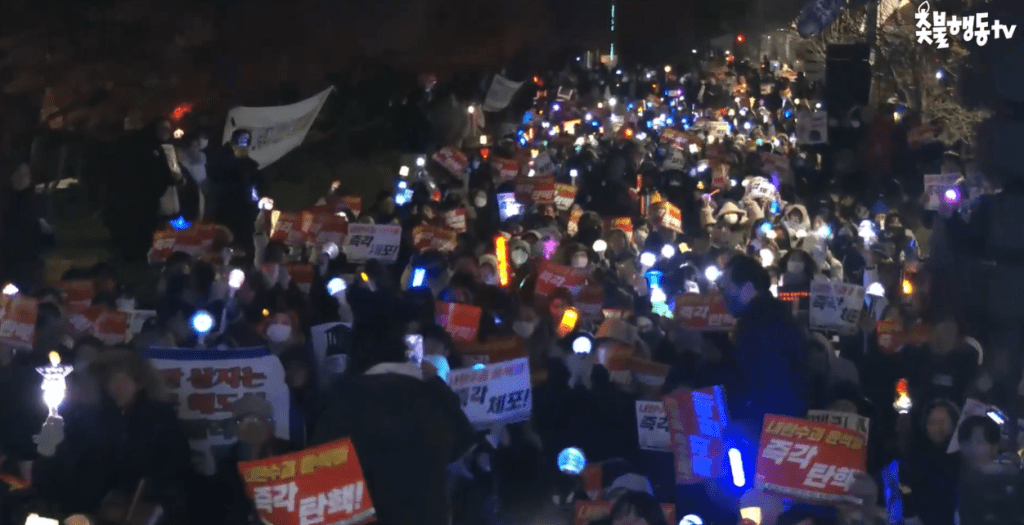
Human Tech #1: Lightsticks turned identity into participation
K-pop lightsticks are not generic glowing objects.
Each group has its own shape, colours and design. Fans buy them to demonstrate support for a particular band or artist and bring them to concerts as visible markers of belonging.
They can be expensive and personally precious.
When younger citizens brought their lightsticks to the protests, they were therefore bringing part of their existing identity into the street.
People supporting different artists arrived with different lights. They did not need to surrender those differences to join the same cause.
The crowd became collective without becoming uniform.
“Fan tools became a safety and endurance interface.”
The lightsticks helped people locate one another in the dark, participate in songs and chants, and remain visible during long winter gatherings.
They also changed meaning through use. An object associated with supporting an idol now became what Oh describes as a supporting light for democracy.
Contemporary reporting found that K-pop fans brought lightsticks representing K-pop groups including SHINee, NCT, NewJeans and Seventeen. Some people subsequently offered to lend their lightsticks free of charge for use at protests.
This was not some centrally branded campaign.
People arrived with objects that already meant something to them – and then gave those objects an additional public meaning.
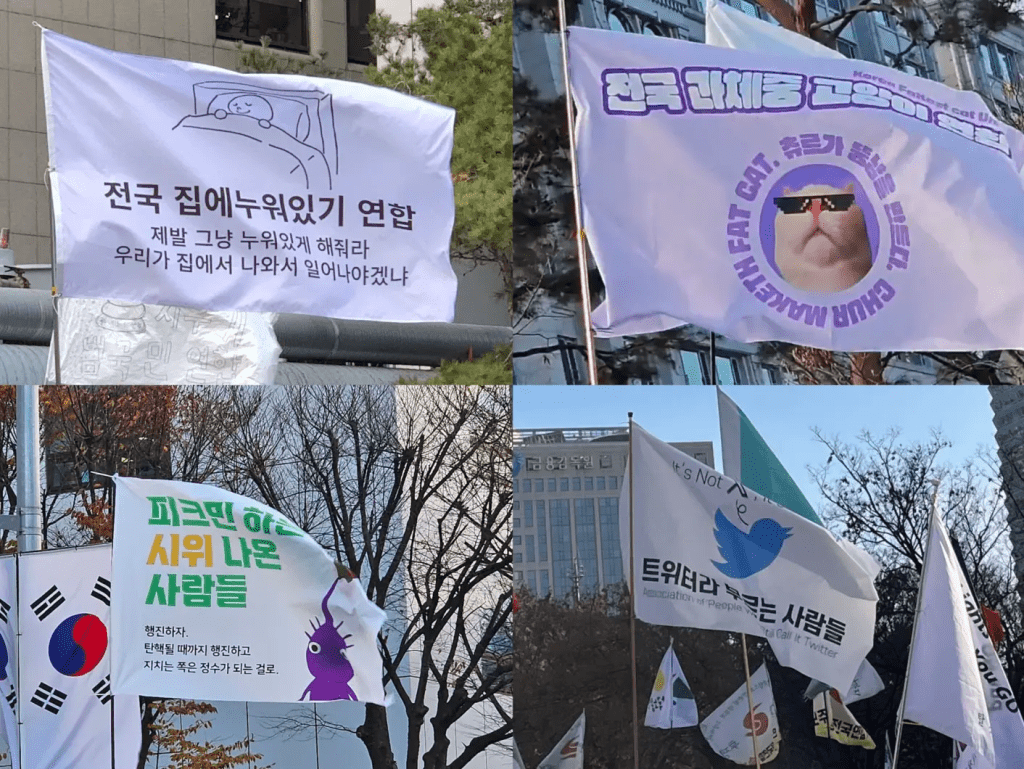
Human Tech #2: Meme flags made the crowd legible
Protest flags traditionally represent political parties, unions or organised movements.
Many of the meme flags in Seoul represented invented groups based on everyday habits, jokes and personality traits.
There were mock associations for introverts, iced-coffee drinkers and even people who had not prepared a flag.
The humour served a serious function.
It allowed someone to say: I am here as myself.
A person did not need to adopt a formal political identity before entering the crowd. They could announce a recognisable fragment of their ordinary life and find others who understood it.
“Meme flags turned anonymous crowds into visible individuals.”
The flags also lowered the emotional threshold for participation. A joke could make it easier to enter a tense public space, start a conversation or show support without delivering a formal political statement.
As Oh puts it, humour made courage easier to carry.
Coverage at the time documented the rapid spread of flags bearing the names of imaginary and deliberately ridiculous organisations.
The crowd became easier to understand because people were not reduced to a single mass. Their different personalities remained visible inside it.
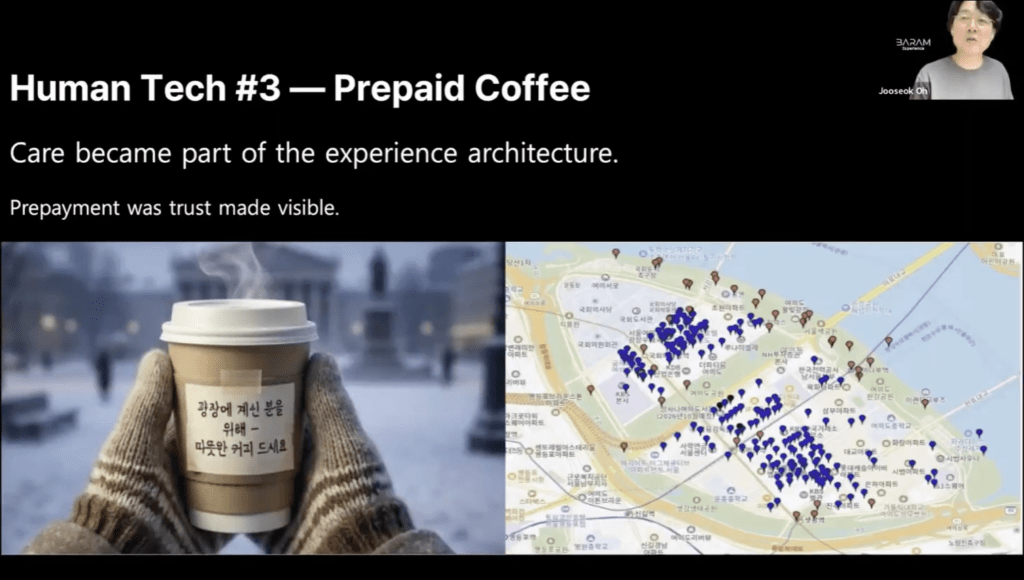
Human Tech #3: Prepaid coffee turned care into infrastructure
Not everyone could join the protests in person.
Some people were working. Others lived elsewhere or could not remain outside in the winter cold.
They found another way to participate.
Anonymous supporters prepaid for coffee, snacks and meals at businesses near the National Assembly. One widely reported donor paid five million won (approx £3,800) for around 1,200 cups of coffee.
Citizen-made maps and websites showed protesters where prepaid food and drinks remained available. They also shared information about public toilets and other useful facilities.
The result was more than charitable giving.
It extended the experience beyond the people physically present.
Someone at home could support a stranger on the street. A café could become part of the civic infrastructure. A digital map could connect the donor, business and recipient without any of them needing to know one another.
“Care became part of the experience architecture.”
The coffee helped people remain outside. The map made the support usable. The prepayment demonstrated that people who could not be present were still involved.
Care became a form of participation.
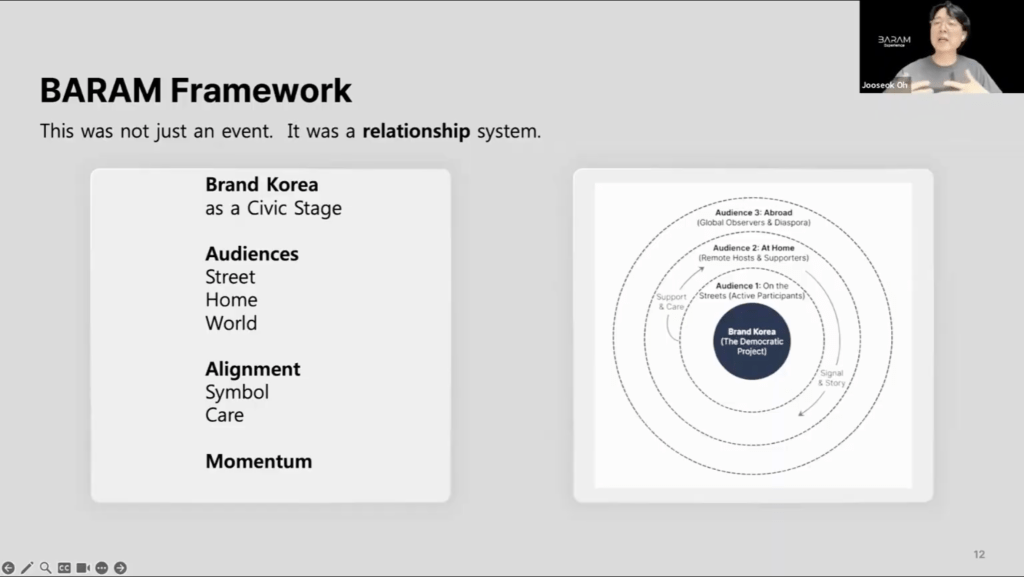
This was a relationship system
BARAM Experience defines its work as designing relationships rather than isolated events.
Oh applies that principle to the protests.
The experience had three connected audiences:
- People participating on the streets
- People supporting them from home
- People observing and sharing the story internationally
Lightsticks and flags sent signals from the streets.
Coffee, food and information carried support towards the people gathering there.
Images and stories travelled outwards to a global audience.
“This was not just an event. It was a relationship system.”
No single organisation controlled the complete system. Its momentum came from many people making small contributions that other people could recognise and use.
This is important for experience designers.
Participation does not always mean persuading everyone to perform the same action in the same place. A ‘relationship system’ allows people to contribute at different distances and with different levels of commitment.
- Someone may march.
- Someone else may make a flag.
- Another person may prepay a meal.
- Another may translate, map, document or share what is happening.
The experience becomes stronger because each person can find an appropriate role.
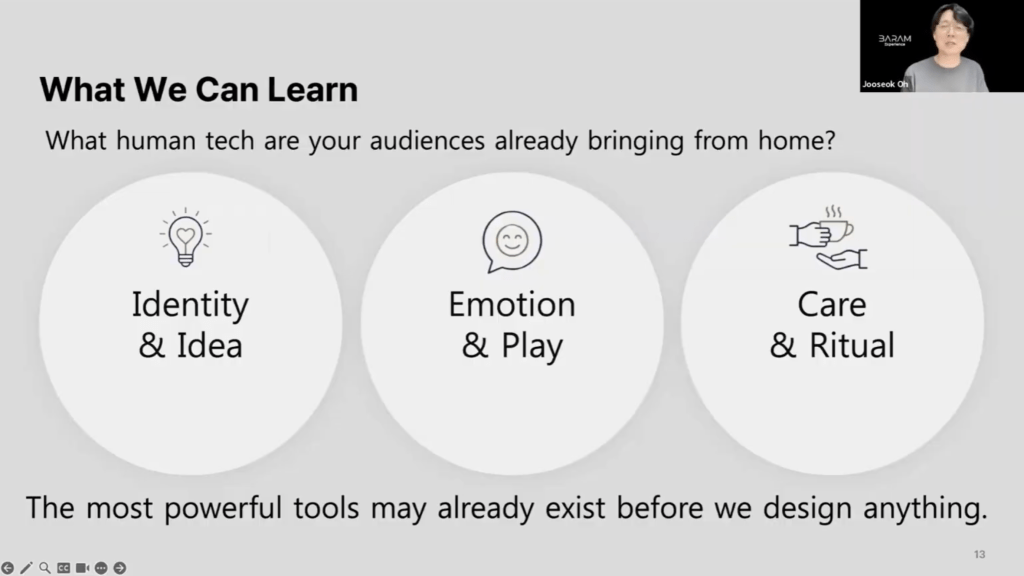
Identity, play and care were the real technologies
Oh groups the lessons into three forms of human tech:
1. Identity and idea
The lightsticks and flags allowed people to show who they were and what they believed.
The collective did not require anonymity or sameness. Personal expression supplied some of its energy.
2. Emotion and play
Music, jokes and visual invention helped people manage fear and pressure.
Play did not trivialise the cause. It gave people a way to sustain participation within a difficult situation.
3. Care and ritual
Prepaid coffee, shared information and repeated Saturday gatherings helped people continue over time.
The movement was supported by practical rituals: prepare, gather, contribute, recover and return.
These were not decorative additions to the political action.
They helped make the action possible.
Do not copy the props
The obvious response would be to introduce lightsticks, humorous flags or prepaid coffee into another event.
That misses the lesson.
- The lightsticks worked because they already carried personal and cultural meaning.
- The flags worked because people created them in their own language.
- The coffee worked because it answered a genuine physical need.
But their power came from the situation, the community and the freedom people had to transform them.
A branded lightstick distributed at registration may look similar. It does not automatically carry the same meaning.
The discussion witnessed around Oh’s ideas raised this tension directly: attempts to manufacture organic participation may fail or feel cynical. A better starting point is to watch how a community already makes its presence felt, then support what is emerging.
The designer’s role is not to imitate the result.
It is to:
- notice the symbols and behaviours people already value
- remove barriers to participation
- provide safe and useful infrastructure
- allow different levels of involvement
- leave room for participants to create meanings the designer did not predict
This requires more humility than inventing a participation mechanic and asking everyone to follow it.
It can also produce something much more powerful.
Experience design can give people agency
As Oh stated, the successful political protests of December 2024 were not engineered by someone with knowledge of experience design.
Indeed, the protests were not engineered by anyone.
Their importance is that the protests make the ‘hidden’ mechanics of collective experience visible.
- People need ways to recognise one another.
- People need permission to bring their own identities.
- People need structures for participating without being physically present.
- People need food, warmth, information and rest.
- People need humour without losing seriousness.
- People need a shared stage without surrendering individual expression.
Good experience design can help create these conditions in any collective event.
Whether you’re looking to heighten engagement, increase dwell time or make a brand memorable, the ability for an audience to act is key to the success of an experience.
And that level of collective expression is worth protesting for.
What to ask in your next meeting
- What objects, jokes and rituals already carry meaning for this community?
- How can people participate without abandoning their individual identities?
- What roles are available to people who cannot attend in person?
- Which practical forms of care will help people remain involved?
- Are we allowing the audience to transform what we provide?
- Where are we trying to manufacture a behaviour that should emerge from the community?
- Are we designing for people, or making space to design with them?
The central question is:
What human technology is our audience already bringing from home?
Oh’s final instruction gives experience designers a clear place to begin:
“Humans. See them. Respect them. Design with them.”
Further reading
- Human Tech Under Martial Law: the original WXO Campfire listing and biography of Jooseok Oh.
- AP’s photographic account of K-pop lightsticks at the protests, showing how young participants changed their visual language.
- The Guardian: South Korea deploys K-pop light sticks and dance in protests against president
- Korea JoongAng Daily on the rise of whimsical protest flags, including examples of invented organisations.
- The Korea Times on anonymous prepaid coffee, including the donation of 5 million won ($3,800) for protesters.
- The Constitutional Court of Korea’s ruling removing President Yoon from office
For more Experience Briefings, head here.
For more information on how to join the WXO, head here.