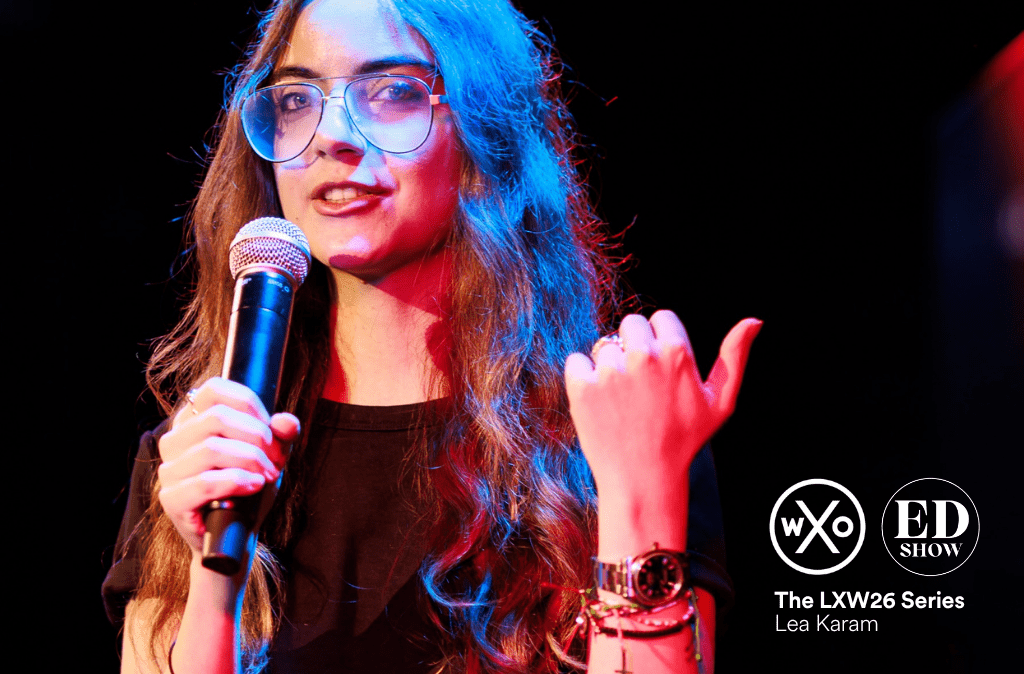
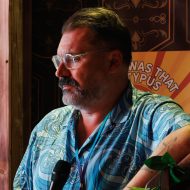
Welcome to the second episode one The LXW26 Series, an eight-part video series produced by The Experience Designers Show in partnership with the WXO.
Recorded live at Ministry of Sound during London Experience Week 2026, this conversation is part of the WXO’s ongoing partnership with The Experience Designers Show. Over the next few weeks, you can expect a series of indepth conversations with some of the people shaping the future of the experience economy.
Episode 2: Lea Karam (Mindscope)
This second episode features Lea Karam, behavioural scientist, Founder and CEO of Mindscope, and one of the most distinctive voices working at the intersection of human behaviour, technology, entertainment, culture and commerce.
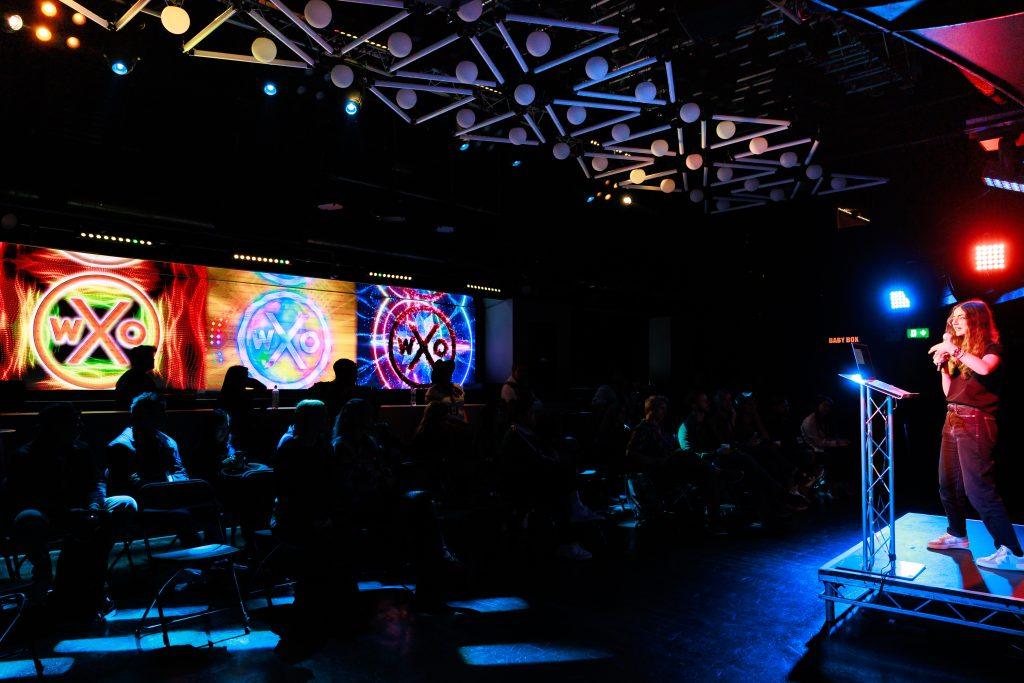
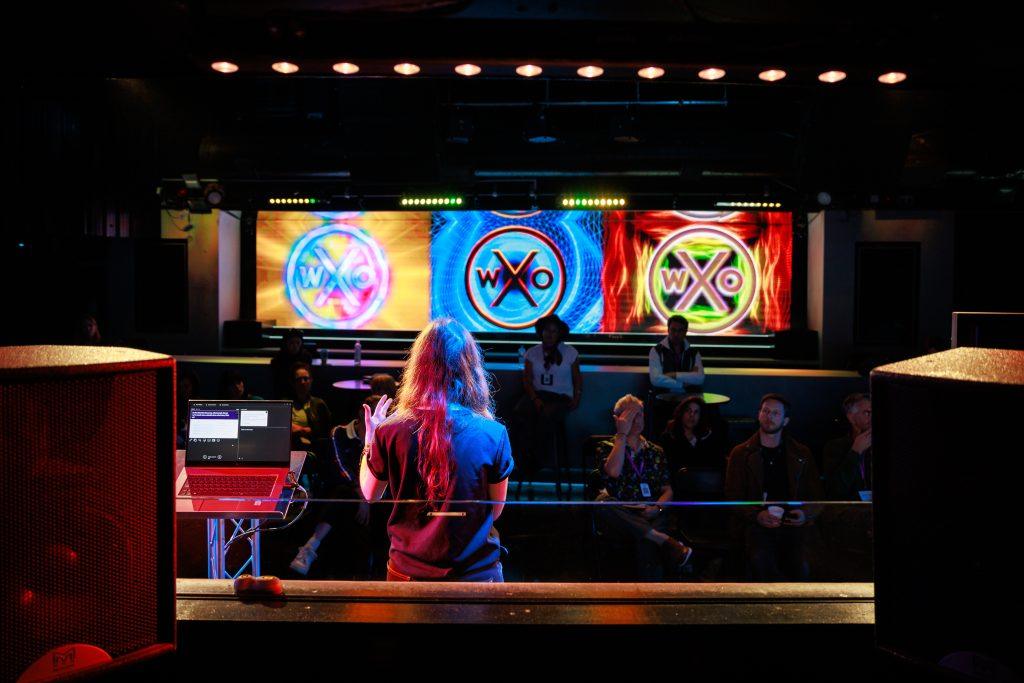
She joined The Experience Designers’ Steve Usher for an in-depth interview before taking to the London Experience Week stage later that day. Both this podcast and her talk were as smart and future-facing as they were grounded in proven data.
Lea has advised and worked with organisations including Google, TikTok, Snapchat, BBC iPlayer, ITV, Pinterest, Canon and American Express Global Business Travel. She has been recognised in Campaign Media Week’s 30 Under 30, Management Today’s 35 Women Under 35, and The Media Leader Future 100, and is a Behavioural Advisor and Executive Member of the International Academy of Digital Arts and Sciences.
But what makes this conversation so valuable for the experience economy is not only Lea’s profile. It is her central challenge to the industry:
We are still designing too many experiences around assumptions about attention, audiences and behaviour that no longer hold.
As Lea tells Steve Usher early in the conversation, the Experience Economy cannot keep relying on old models.
“You can’t really build in today’s attention economy, creator economy, experience economy and this hyper-digitalisation based on old models. They just don’t work anymore.”
That is the provocation running through the whole episode. If we want to understand what people do, we have to stop guessing from the outside and start understanding the behavioural systems they actually live inside.
London Experience Week as lived experience
The conversation opens in The Green Room at Ministry of Sound, with Lea preparing to go on stage at London Experience Week.
Before getting into behavioural science, Lea points out the setting itself. The conversation is not taking place in a neutral studio. It is happening inside an environment built for experience.
“I’m excited to be here because in this room, we’re actually experiencing the Experience Economy. If you’re listening, you should see what we’re surrounded with… music posters from the 2000s and 1990s. It’s amazing.”
That matters because Lea’s work is all about the gap between what brands think people want and what people actually respond to.
A spreadsheet can tell you what someone clicked. A dashboard can tell you what they watched. A platform can tell you how long they stayed.
But none of that automatically tells you what they felt, why they cared, why they filtered something in, or why they rejected it instantly.
That distinction – between measurement and understanding – becomes one of the key themes of the episode.
The pyramid is gone
Steve asks Lea about the gap between senior leaders, younger employees, customers and culture. Lea’s response is immediate:
“The pyramid is gone.”
By this she means the old hierarchical model of organisational understanding no longer works. Leaders cannot sit at the top of the organisation, receive filtered information from below, and expect to understand how people are behaving in a fragmented, algorithmic, creator-led world.
The traditional pyramid assumed that authority, strategy and insight flowed downwards. But the modern market does not behave like that:
- Culture moves sideways.
- Creators build audiences faster than institutions.
- Employees often understand emerging behaviours before leadership does.
- Consumers can publicly correct, remix or reject a brand in real time.
- Young people are not waiting for permission to build new careers, identities, communities or routes to influence.
Lea’s point is not that organisations should abandon structure. It is that they must stop confusing hierarchy with intelligence.
“If you want to really connect with them, you have to unlearn some things. You have to unlearn how you used to function five, ten years ago, and re-adapt. Ask them the questions.”
For experience designers, this is a practical warning. If your insight process only listens upwards, it will miss what is happening outwards.
The people closest to the behaviour – younger employees, community managers, creators, retail staff, cultural insiders, platform natives, fans and users – often see the shift first.
The organisation that can listen to them early has an advantage.
Gen Z is not lazy. The system has stopped designing for them
One of the strongest sections of the conversation deals with generational myths.
Steve suggests that much of the public narrative about Gen Z is negative. Lea agrees that too many lazy assumptions have been made: that Gen Z does not care about work, lacks focus, or is less loyal.
Her response is more interesting.
She argues that Gen Z still wants what humans have always wanted: belonging, safety, love, connection, agency, meaning and the feeling of being seen.
The problem is not that younger audiences no longer care. The problem is that many organisations have stopped designing for these basic human needs.
“They still want connection. They still want belonging. They still want those factors, but the problem is the industry has stopped designing for it.”
This is where behavioural science becomes vital for the experience economy.
It reminds us that human behaviour has deep continuities. The tools change. The platforms change. The visual language changes. The speed of culture changes. But the underlying needs often remain:
- People still want to be recognised
- They still want choice
- They still want emotional reward
- They still want to feel they belong somewhere
- They still want environments that make sense to them
Lea’s critique is that much of modern experience has become too algorithmic, too same-same, too optimised around sameness rather than distinctiveness.
In her words, “everything has become algorithmic”. The result is a lack of taste, creativity and difference.
That is a serious challenge for experience designers. Because if everything is optimised for the same platform behaviours, the output starts to feel interchangeable.
Distinctiveness is no longer a brand nice-to-have. It is a behavioural necessity.
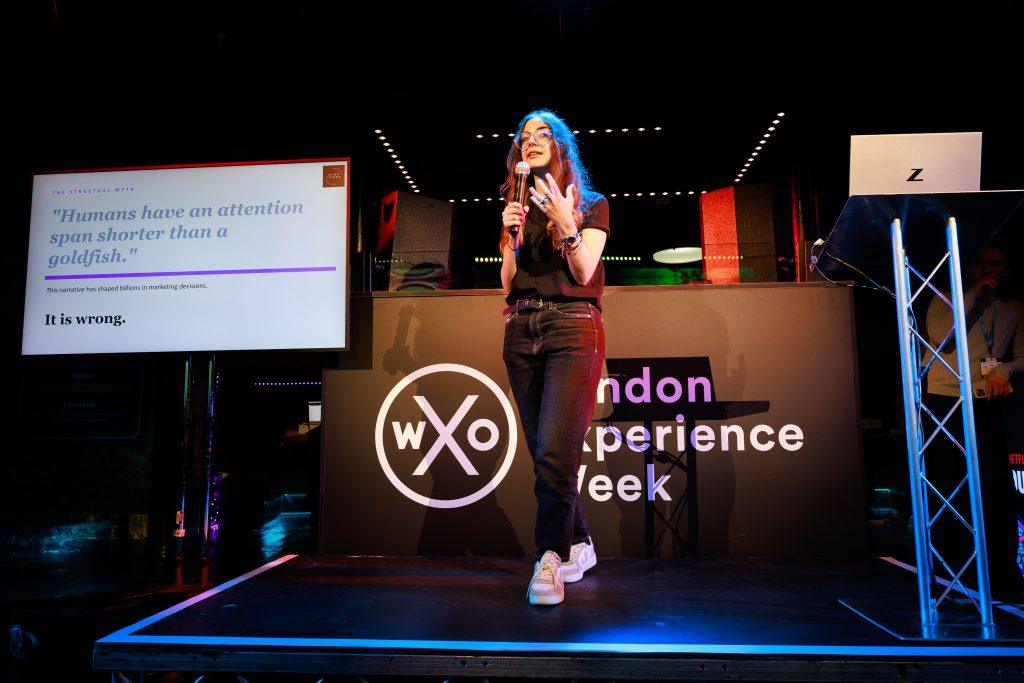
Attention spans have not disappeared. People have built sharper filters
Perhaps the most important myth Lea challenges is the idea that attention spans have simply collapsed.
This is an idea that has shaped enormous amounts of marketing, media and experience design. It has encouraged brands to go shorter, faster, louder and more disposable.
Lea is not convinced.
“There’s no proof that attention spans have decreased whatsoever… but there is proof that we’ve built sharper filters. I don’t call it attention spans. I call it filtering spans.”
This is a subtle but powerful reframing.
If you believe attention spans have decreased, the answer is to make everything shorter.
But if you believe people have built sharper filters, the answer is very different. You have to become more relevant, more distinctive, more intentional and more worthy of being filtered in.
The distinction matters.
A person who skips your content in two seconds may not be incapable of attention. They may simply have decided, very quickly, that what you are offering is not for them.
And when people do filter something in, they can go deep. They can watch long-form creator content. They can join communities. They can remix brand content. They can follow a niche interest for years. They can travel for an experience. They can queue for a drop. They can build identity around a fandom.
So the job is not to chase attention at all costs.
The job is to earn selection.
That is why Lea argues for a change in the industry’s language. If we keep talking about shrinking attention spans, we will keep producing shorter and shallower work. If we talk about sharper filters, we can start designing experiences people actively choose to enter.
For the experience economy, that shift is critical.
A great experience is not merely noticed. It is chosen.
The quantified need for connection
The episode then moves into one of the most important questions for WXO’s community: why is the experience economy growing at this particular moment?
Lea’s answer is behavioural. As technology becomes more pervasive, the counter-need for human connection increases.
She refers to this through the law of polarity: when something rises sharply in one direction, a corresponding need rises in the opposite direction.
- Hyper-technology creates a hunger for human judgement.
- Hyper-digitalisation creates a hunger for physical presence.
- AI-generated sameness creates a hunger for taste.
- Algorithmic feeds create a hunger for belonging.
Lea puts it directly:
“My mission is to show that human impact equals commercial impact, because that means we can get investment back.”
This is an important point for the experience economy.
For years, many experience professionals have argued that people need connection, meaning and presence. The industry instinctively understands this. But instincts are not always enough to unlock investment.
Budgets still need evidence.
Boards still ask for return.
Marketing teams still operate in a performance economy.
That is why Lea’s work is relevant. Behavioural science gives the experience economy a stronger commercial language. It helps connect human need to business outcome.
The case for experience cannot only be: “This feels good.”
It must increasingly become: “This human need is measurable, valuable and commercially consequential.”
That is where the next phase of the experience economy may be won.
Case study: the BBC, YouTube and doing the homework
One of the strongest practical examples in the episode is Lea’s work with the BBC around YouTube.
This case matters because it captures a challenge many legacy organisations now face: how do you move into new audience ecosystems without losing what makes you trusted in the first place?
The BBC is one of the UK’s most trusted and recognisable media brands. But younger audiences are no longer waiting inside traditional broadcast environments. They are on YouTube, TikTok, creator platforms, social feeds and streaming ecosystems.
This is not theoretical. Ofcom’s Media Nations 2025 report found that YouTube was the UK’s second-most-watched service overall, ahead of ITV, and the most-watched service among both 16–34-year-olds and children aged 4–15. Among those younger groups, YouTube accounted for 22% and 28% of video viewing respectively.
In that context, the BBC’s move towards YouTube is not simply a distribution experiment. It is a response to where attention, habit and cultural discovery are already happening.
Lea describes the BBC’s decision as courageous because it did not simply involve dumping existing content onto a platform and hoping it would work.
The team did the behavioural work first.
“We dissected the psychology of under-25s on YouTube to understand what they look at, why they look at it, what’s missing, what are the real topics, what are the real moments that we should speak about.”
That sentence should be pinned above every platform strategy deck.
The goal was not to chase youth by imitation. It was to understand the psychology of the audience in that environment, then build specific IP that could work on YouTube while still connecting back to the BBC and iPlayer.
This is exactly the kind of bridge Lea talks about throughout the episode: between legacy and newness, trust and transformation, platform behaviour and brand identity.
The lesson for experience designers is clear. If you want to enter a new environment, do not simply move the old experience into the new space:
- Study the environment
- Understand the behaviour
- Respect the context
Then build for that world.
Why Mindscope exists
The BBC example leads naturally into the story of Mindscope.
Lea describes how, over time, people from tech, entertainment, culture, commerce and the experience economy kept coming to her with problems that did not fit neatly into old consulting categories.
The old silos had collapsed:
- Tech had become entertainment
- Entertainment had become commerce
- Commerce had become media
- Media had become community
- Brands were looking for someone who could bridge science, culture, technology and creativity
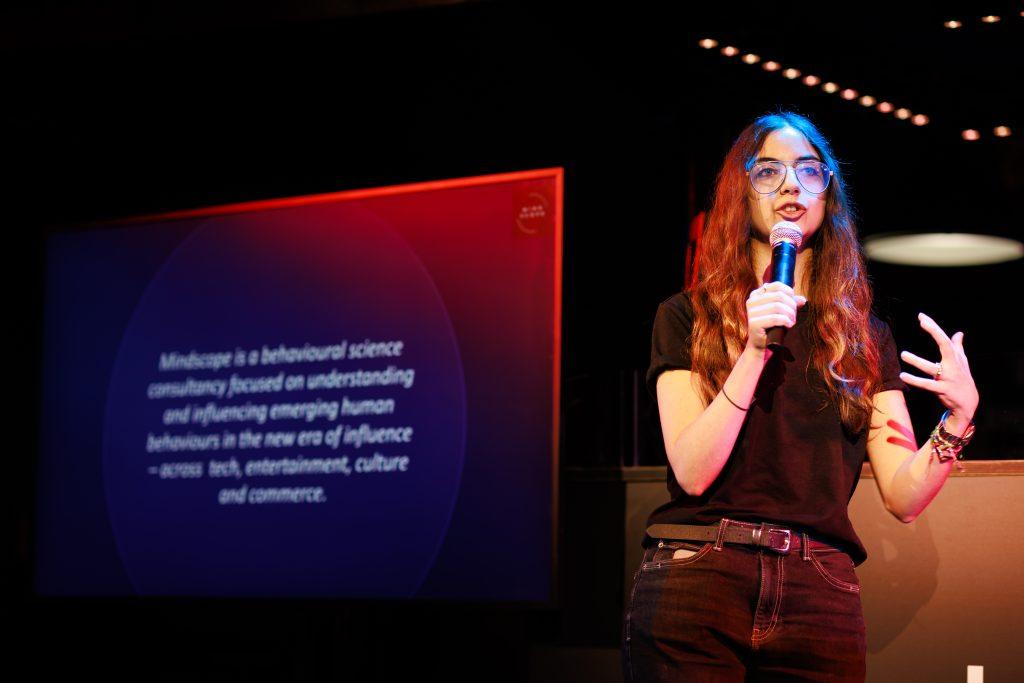
That is the space Mindscope was built to occupy. The company describes itself as a modern behavioural science consultancy and behavioural innovation lab for technology, entertainment, culture and commerce. Its work is designed to help organisations understand modern audiences, humanise their strategies and reconnect with people in a fragmented media landscape.
In the episode, Lea explains the gap she saw:
“The media silos have completely collapsed… Tech has become entertainment, entertainment has become commerce, commerce has become media. Everything is completely gone.”
This is why behavioural science is becoming more important, not less.
- When categories blur, human behaviour becomes the anchor.
- When platforms shift, human motivation becomes the map.
- When data multiplies, interpretation becomes the value.
Lea talks about Mindscope as a “human compass”. That phrase is useful because it positions behavioural science not as a set of tricks, but as a way of navigating complexity.
In an age of AI, automation and platform volatility, the companies that understand people best will not necessarily be the ones with the most data. They will be the ones that can turn behavioural understanding into better decisions.
Pinterest, Coachella and the digital-to-physical shift
Another live example in the conversation is Pinterest.
Lea describes Pinterest as being in a powerful position because it sits between digital inspiration and real-world identity. People use it to create boards, plan lives, shape taste, upgrade themselves and imagine who they want to become.
That makes it especially interesting for the experience economy.
In the past, brands often thought about extending physical identity online. Lea argues that the shift is now reversing.
“You have to extend your online identity offline to reconnect with people.”
Pinterest’s 2026 Coachella activation is a useful example. The platform created a phone-free experience at the festival, inviting guests to lock their phones in a pouch and take part in physical activities designed for shared presence: charm-making, styling and beauty touch-ups, printed Joy Guides, stickers, postcards and photo artefacts to take away and share after the festival.
That is not just a nice brand activation. It is a behavioural response to a digitally saturated culture.
At a festival where so much behaviour is mediated through the phone – filming, posting, checking, comparing, broadcasting – Pinterest created a space that made being present the point.
This aligns closely with Lea’s argument. Technology and humanity do not have to be opposites. The question is whether technology is serving a human outcome.
As she says:
“Technology was always built for a human outcome. As long as you know what the benefit is, you won’t experience any diminishing return.”
That is a useful standard for experience designers.
Do not ask only: What technology can we add?
Ask: What human benefit does this technology serve?
- Does it increase agency?
- Does it deepen participation?
- Does it make people feel more connected?
- Does it help them create, remember, belong or transform?
If the answer is no, the technology may only make the experience more complex.
The metrics are getting it wrong
Lea’s critique of old models becomes especially sharp when she talks about measurement.
Steve asks what parts of the old paradigm are no longer working. Lea’s answer is one word:
Impressions.
Her point is that an impression does not necessarily mean someone has meaningfully seen you. A click does not necessarily mean you understand motivation. More data does not necessarily mean more understanding.
In fact, more data can sometimes mean the opposite.
“The fact that there’s more data out there means that you know less, because you end up not ingesting it in a way that makes you understand people.”
This is a major issue for experience design and experiential marketing.
Too often, measurement still defaults to reach, impressions, clicks, footfall, dwell time and social posts. Those metrics have value, but they do not necessarily explain what changed in the person.
- Did they feel safer?
- Did they feel recognised?
- Did they understand the brand differently?
- Did they join a community?
- Did they talk about it later?
- Did they return?
- Did they change a behaviour?
- Did they feel that the experience belonged to them?
Lea offers one particularly useful idea:
“What people pause on is much more important than what they click on.”
The pause is an underrated experience metric.
A pause suggests friction, attention, interest, curiosity or emotional weight. It may indicate that something has cut through the filter. In a world of constant scroll, making someone pause can be more meaningful than pushing them to click.
For experience designers, this opens up a different way of thinking about value.
The best experiences are not always the ones that generate the fastest response. They may be the ones that create the most meaningful pause.
The end of the nudge era
Towards the end of the episode, Steve asks Lea about authenticity and the risk that brands simply turn the digital-to-physical shift into another round of shallow popups and activations.
Lea’s answer is that behavioural science itself needs to move beyond simplistic applications.
The old “nudge” model is not enough.
“The behavioural science nudge era is gone. It’s not about nudges anymore, because if you just nudge here and there, it doesn’t work.”
This is an important challenge.
For years, behavioural science has often been reduced in marketing to small interventions: change a button, reframe a message, create urgency, reduce friction, optimise a default.
Those tools can still be useful. But they are not enough for a world where people encounter, judge, discuss and interact with a brand across many connected environments before the brand ever speaks to them directly.
Lea argues instead for systems thinking.
Brands need to think less in terms of isolated campaigns and more in terms of ecosystems, infrastructures and audience worlds.
This matters deeply for the experience economy.
An experience cannot simply be a single moment that appears, performs and disappears. It has to make sense within a wider behavioural system: the platform where people discovered it, the community that validates it, the content that surrounds it, the physical environment that hosts it, the memory it leaves behind, and the commercial or social outcome it supports.
The experience is not the whole system. But it can become the moment where the system becomes human.
What experience designers should take from this
Lea Karam’s conversation with Steve Usher is a reminder that experience design is not just about designing environments, moments or activations.
It is about designing for behaviour.
That means asking better questions.
Not: How do we grab attention?
But: Why would someone choose to filter us in?
Not: How do we target Gen Z?
But: What needs, communities and psychographic profiles exist within this audience?
Not: How do we use AI?
But: What human benefit does this technology serve?
Not: How many impressions did we get?
But: What made people pause, feel, remember or act?
Not: How do we nudge a decision?
But: What system are we building around the human being?
The deeper message of the episode is that the future belongs to organisations that can bridge worlds:
- Technology and humanity
- Data and meaning
- Culture and commerce
- Digital and physical
- Platform logic and real-world presence
- Legacy trust and new audience behaviour
That is why behavioural science matters to the experience economy. It gives us a way to move beyond assumption and into understanding.
And in a world overloaded with noise, that may be the most valuable experience advantage of all.
Watch the full conversation
This article summarises the second interview in The LXW26 Series, produced through the partnership between WXO and The Experience Designers Show at London Experience Week. You can watch the full conversation with Lea Karam in the embedded video at the top of this article, or follow through to The Experience Designers Show for the complete episode.
Coming next in The LXW26 Series
This is the second of eight full-length conversations filmed live at London Experience Week 2026 and shared here as part of the WXO / The Experience Designers Show partnership.
Live:
- Dr Amna Khan — Consumer behaviour expert, 1,000+ media appearances on BBC, ITV, Channel 5.
- Lea Karam — Founder, MindScope Labs; working with clients including Google, Pinterest, TikTok, BBC, ITV and AMEX.
- Paul Nicholls — CEO + CCO, Factory Fifteen; BAFTA and Emmy Award-winning director, with work connected to The Sphere.
Coming soon:
- Eyal Danon — Co-Founder, COGS / Clockwork Dog; the platform powering experiences for Punchdrunk, Secret Cinema and Netflix House.
- Abraham Burickson — Co-founder, Odyssey Works; immersive pioneer and Yale University Press author.
- Anam Ahmad — CCO, The Hanging House; award-winning agency founder and Forbes 30 Under 30 honouree working across the UAE and KSA.
- Joe Pine — Author and experience economy thinker; widely recognised as the father of the Experience Economy.
- Vance Garrett — Director and storyteller; formerly of Sleep No More, Museum of Ice Cream and 29Rooms.
We’ll be publishing each conversation as part of this series on the WXO website, exploring how experience thinking is changing the way brands, places, communities and organisations create value.