
Welcome to the first episode of The LXW26 Series, an eight-part video series produced by The Experience Designers Show in partnership with the WXO.
Recorded live at Ministry of Sound during London Experience Week 2026, this conversation is the first in WXO’s ongoing partnership with The Experience Designers Show. Over the next few weeks, you can expect a series of indepth conversations with some of the people shaping the future of the experience economy.
Episode 1: Dr Amna Khan
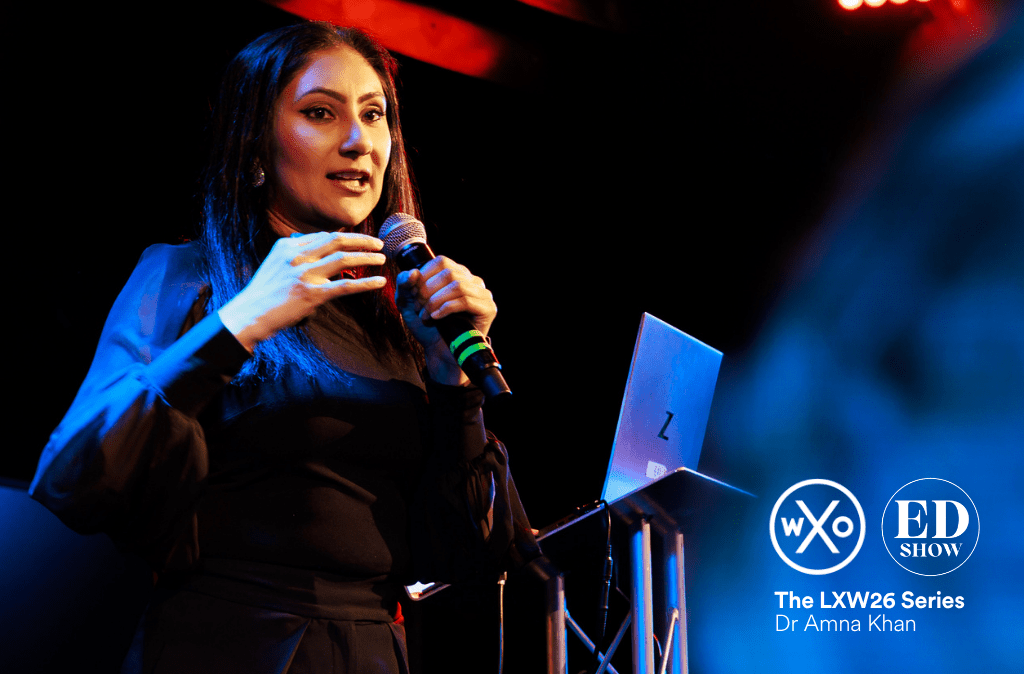
Our first episode features Dr Amna Khan, Senior Lecturer in Consumer Behaviour and Retailing at Manchester Metropolitan University Business School, and one of the UK’s most recognisable voices on consumer behaviour.
WXO first encountered Dr Kahn at Outernet back in January 2026 where she was contributing to a panel on experiential retail. We just knew she had to speak at London Experience Week. Hosted by The Experience Designers’ Steve Usher, the conversation was based around trust, retail, social commerce, popups and Gen Z. But with Dr Kahn fresh off the stage for her talk ‘Consumer Trust: Yesterday, Today and Tomorrow’, she began by reflecting on the experience of London Experience Week itself.
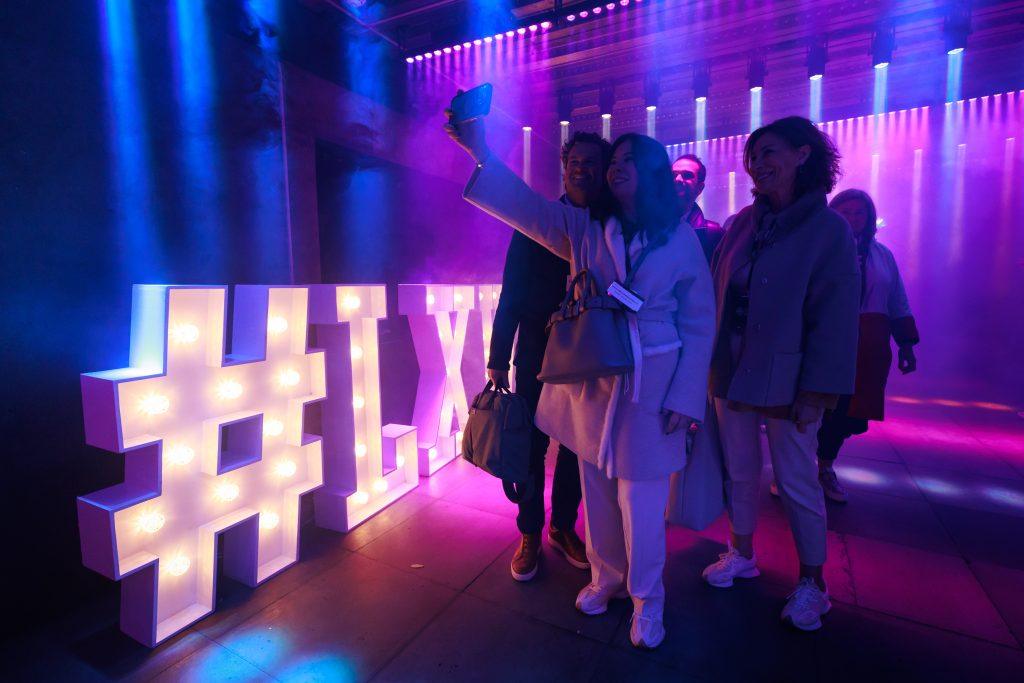
“The moment you walk in, you are transformed,” she told the host. “We opened those doors and you’ve got the sign #LXW, the lights were low… We were just like, ‘Wow, we’re in a different world…’”
Having spoken on stages around the world, Amna said this one “hit differently”: the lighting, the sound, the environment, the feeling of being transported, and perhaps most importantly, the warmth of the community.
“Everybody’s smiling at you! Everybody wants to speak to you and find out who you are. Within the first 10 minutes of being here, I’d already met a few people. It’s just incredible.”
That opening observation matters, because the rest of the conversation returned again and again to one essential point: experiences do not build trust through design alone. They build trust when people feel seen, welcomed, understood and cared for.
Trust is not just about competence
Amna’s academic work has focused deeply on the mechanics of trust. Her PhD, sponsored by AstraZeneca Pharmaceuticals, explored trust in the Chinese market, including the role of guanxi relationship networks in business and consumer behaviour.
One of her central points is that trust is contextual. It varies across cultures, markets, categories and relationships. But broadly, it has two major dimensions.
The first is cognitive: competence, reputation, performance, reliability. Can this organisation do what it says it will do? Will the product arrive? Will the service work? Will the experience match expectations?
The second is emotional: warmth, empathy, care, energy, benevolence and the feeling of being in relationship with another human being.
“The human element is so important,” Amna said. “People do business with people. We have always done ‘people business’.”
For experience designers, this is a crucial reminder. It is easy to focus on the visible parts of the experience: the space, the staging, the content, the lighting, the interface, the journey map. But trust is built through repeated exchanges. It develops when people take small risks, receive something back, and slowly feel safer in the relationship.
The implication is uncomfortable for brands that think trust can be created through messaging alone. It cannot. Trust is not simply what you say about yourself. It is what people experience you doing, especially when the stakes rise.
The critical moment is when something goes wrong
One of the most useful parts of the conversation comes when Steve and Amna discuss service recovery: what happens when a brand, store, experience or organisation gets something wrong.
Amna’s research suggests that these moments can accelerate trust, because they reveal whether the relationship has real substance.
“That’s your moment of truth to determine how important that relationship is,” she revealed. “Service recovery is so important… it can be the difference between you staying and having a longer relationship and actually building that trust again.”
In other words, failure is not always the end of trust. Sometimes it is the test of trust.
If an organisation responds with care, honesty and speed, it can make the relationship more resilient. If it does nothing, the message is equally clear: you do not matter enough for us to look after you.
For anyone designing experiences, this expands the definition of the experience itself. The experience is not just the immersive installation, the flagship store, the event, the big reveal or the beautiful theatre. It is also the queue, the complaint, the refund, the confused guest, the broken promise, the moment when a visitor needs help.
Trust is not tested when everything is working. It is tested when something breaks.
From institutional trust to human trust
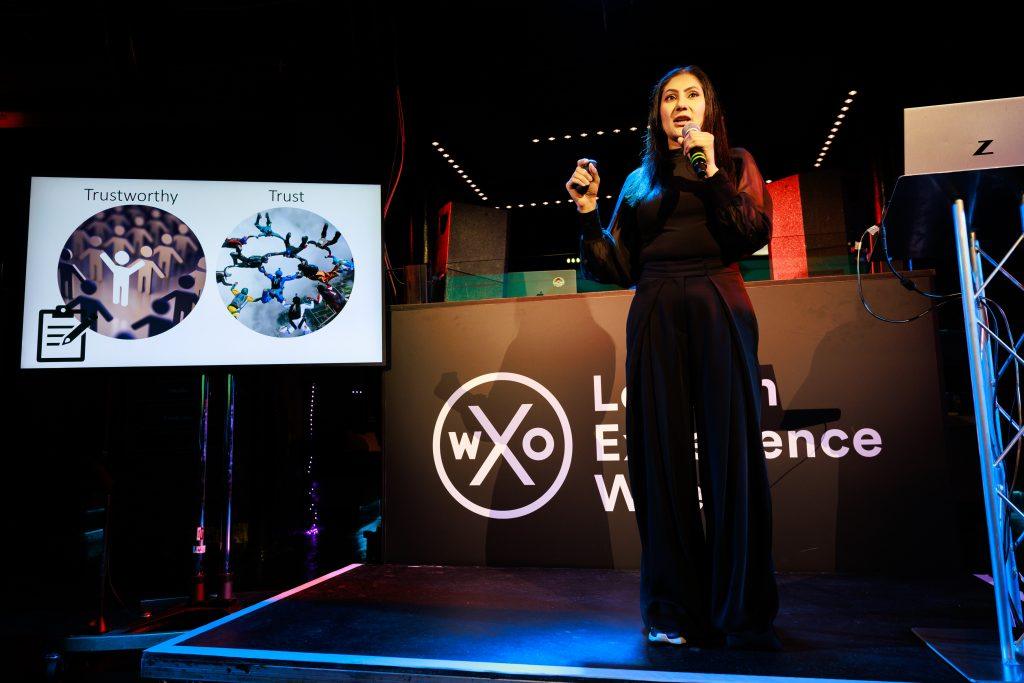
Amna then turns to one of the biggest shifts affecting brands: the fragmentation of trust in a social world.
For a long time, consumers placed trust in institutions, businesses and big brands. Today, trust is increasingly built through people: founders, creators, influencers, staff, hosts and visible representatives of a brand.
Social media has now made the personal dimension scalable. A founder can now talk directly to consumers. A creator can become the trusted route into a product. A retail worker can embody a brand more powerfully than a campaign. A customer community can validate or reject a product in public.
Amna gives the example of P.Louise and its Christmas pyjamas. When the product failed to meet consumer expectations, social media called it out quickly. But her point is more nuanced than “bad product equals bad brand”. Consumers might reject one product while still trusting the founder, the community or the wider brand enough to keep buying elsewhere.
Why? Because the emotional relationship still has value. And because the response matters.
“She owned it straight away,” Amna said of the founder’s response. “She showed her vulnerability. She said, ‘I’ve got this wrong and I’ll learn from it.’”
That vulnerability made the brand feel human.
“She’s made herself human,” Amna said. “You’re looking at me and this big brand… but you know what? It’s just me.”
This is a major challenge for large organisations. Big brands are now competing with founder-led, creator-led and community-led businesses that often feel more reactive, more personal and more emotionally available.
The answer is not simply to hire an influencer or bolt on a collaboration. The deeper challenge is to find where human trust already exists inside the organisation, and then design around it.
Retail’s most underused asset is still the person in the store
The conversation becomes especially relevant for physical retail.
Steve argues that many flagship stores have invested heavily in aesthetics, architecture and visual experience, but have not evolved the role of the sales assistant with the same imagination. The spaces have changed – however the human interaction often has not.
Amna’s response is direct:
“Let the tech look after what tech can do and the person look after where the impact’s created.”
She contrasts two very different store experiences. In one, you walk in and are barely acknowledged. In the other, someone notices you, welcomes you, reads the situation and creates a human moment.
Her example of LUSH is simple but powerful. Her daughter wanted to go into the store. As soon as they entered, a member of staff saw the child’s interest, invited her to play with water and colours, and immediately created a moment of participation.
That is experience design at the human scale.
The point is not that every store needs to become a theatrical production. It is that every store needs to understand the emotional potential of the people inside it.
“It’s a skill to serve,” Amna said. “It’s a skill to be in sales. It’s a skill that they need to be taught.”
But this cannot become a dead script. The best service interactions need individuality, warmth and genuine interest. Staff need tools, training and permission to connect in a way that feels human.
Amna also points to Holland & Barrett, where staff are trained to advise customers and supported by AI tools that help navigate thousands of products. In that model, technology handles the retrieval and efficiency layer. The human brings judgement, empathy, intuition and personalisation.
Fortnum & Mason offers another example: a store understood not just as a place of transaction, but as a place of story, feeling and social connection.
Some people enter to buy. Some enter to browse. Some enter to talk.
That, Amna reminds us, is what shops used to be.
Popups are powerful because they become memories
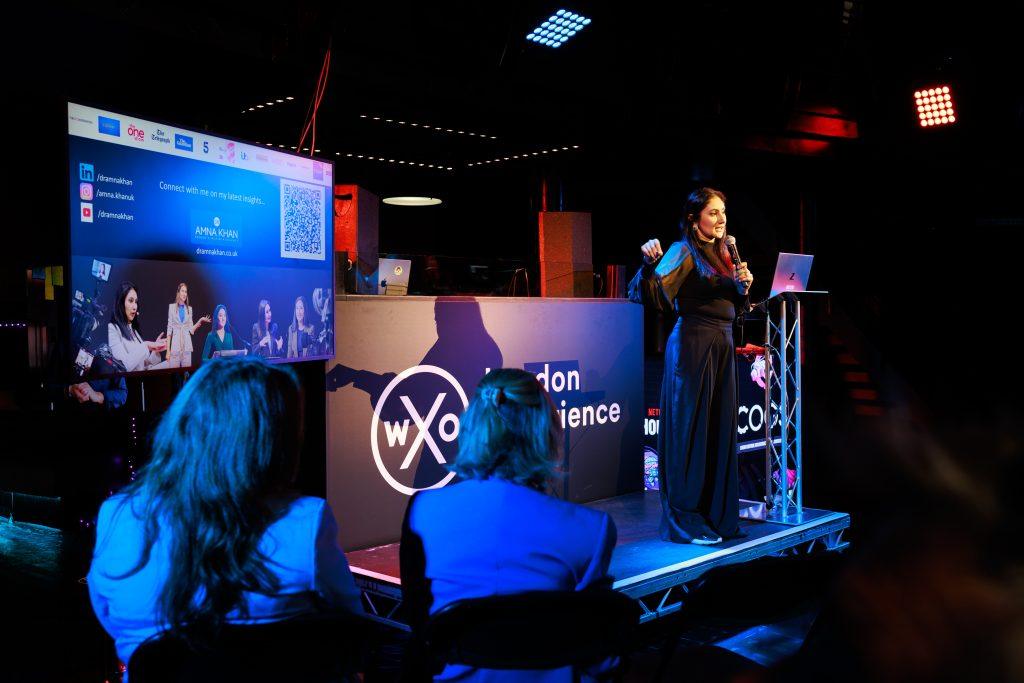
The conversation then moves to popups, festivals and temporary brand worlds, from Coachella to Cannes Lions.
For Amna, the power of the popup lies partly in its temporary nature. It is novel. It is spontaneous. It appears for a limited period of time. It allows a brand to do something that might not make sense as a permanent store experience.
But her most important point is this:
“It’s not always about selling.”
A popup can be a campaign, a service, a gesture, a moment of generosity or a way of showing up in a context that already matters to the consumer.
“It’s about showing up in places where it matters to them… but leaving them something that they feel, think about and remember.”
That is where popup strategy becomes experience strategy. A useful service at a festival, a generous intervention at a cultural event, a thoughtful brand moment in a high-emotion context: these are not just activations. They are trust-building tools.
As Amna puts it, brands like Coca-Cola understood this long ago. Get into the places where memories are made, and you have a chance to become part of the memory.
The modern consumer is not waiting for permission
Perhaps the most urgent section of the interview concerns the newly empowered consumer.
Amna describes today’s consumer as more informed, more critical and more willing to act. They have more choice, more information, more routes to purchase, more ways to compare, more ways to call out bad behaviour, and more ways to build alternatives.
“We vote with our wallets,” she said, “and we ain’t afraid to tell you when we’re not going to vote with our wallets.”
This is not only about Gen Z, although younger consumers often make the shift more visible. It is about a wider fragmentation of consumption.
People no longer behave consistently within neat category assumptions. Someone might buy luxury at full price, then buy second-hand on Vinted. They might reject one product from a brand but remain loyal to another. They might care about price in one context, ethics in another, identity in another, convenience in another and community in another.
Simply, the mass brand does not control the consumer journey in the way it once did.
“The consumer’s voice is so strong, so empowered,” Amna said. “It wouldn’t have happened without social media and those platforms.”
Consumers are no longer just consumers. They are creators, critics, distributors, community-builders and brand-builders. They can create the challenger product, the alternative brand, the counter-community and the new route to market.
For experience designers, that changes the brief. We are not designing for passive audiences. We are designing for people with agency, voice and options.
Live shopping is really about belonging
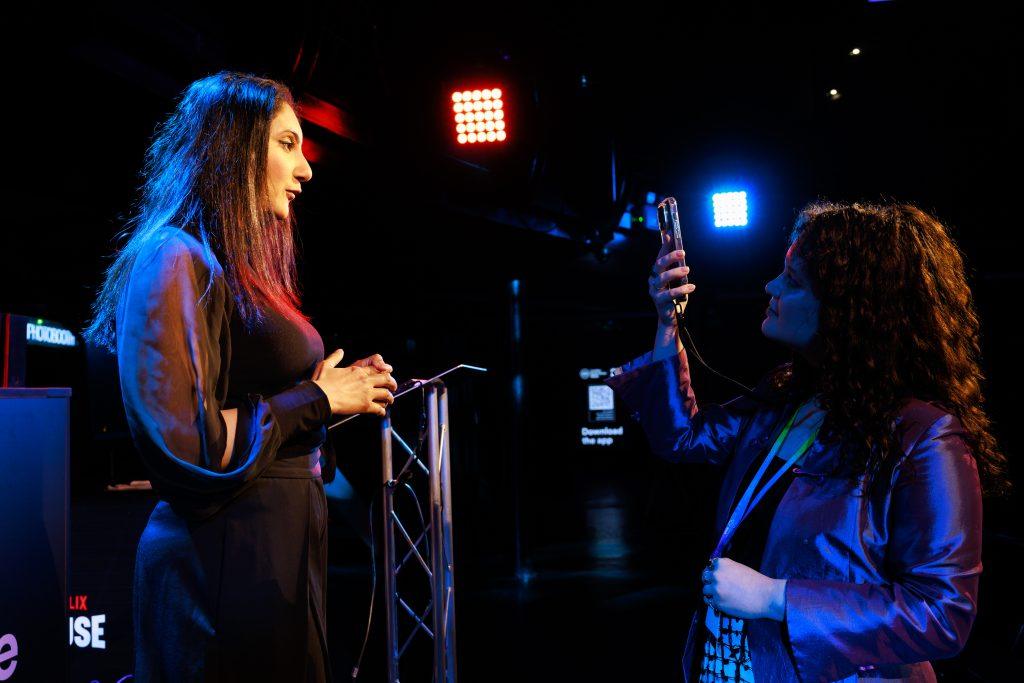
The final major theme in this episode is live shopping, particularly the kind of social selling that is already huge in China and increasingly visible in Western markets through platforms such as TikTok.
At first glance, live shopping looks transactional: a host, a product, a countdown, a purchase.
Amna argues that something deeper is going on. In immersive shopping environments, when consumers feel seen, it creates what she calls stickiness: connection with the host, connection with the audience, emotional engagement, trust and increased purchase intention.
The real driver is not only commerce. It is belonging.
“We’re looking for community,” Amna said.
She tells the story of a TikTok live seller whose customers began acting as moderators, answering questions from other viewers, helping with product information and effectively co-creating the sales experience.
“They build a connection with that host, but they also build a connection with the people in there,” she said. “This is just screaming, crying out: we want to belong in places.”
That line should matter to anyone designing stores, festivals, brand homes, memberships, digital communities, popups or live commerce environments.
The human need underneath is often the same: to be seen, to belong, to participate, to have a role, and to feel that the experience would be different without us.
What this means for experience designers
Towards the end of the conversation, Steve brings the discussion back to the experience economy itself.
His challenge to retail is clear: too many physical spaces are still playing safe. Too many are investing in aesthetics without rethinking the deeper role of experience. Too many are missing the opportunity to create meaning, connection and trust.
Amna agrees, returning to the feeling she had when she first walked into London Experience Week earlier that day.
“Where’s that wow magical moment?” she asked. “You don’t always get that in stores.”
Her provocation is that brands may need both permanence and temporality: a stable identity, but also a changing experiential layer that gives people a reason to return, notice, feel and remember.
For the WXO community, the message is clear: Trust is not a comms problem. It is an experience design problem.
It lives in the greeting at the door, the way failure is handled, the emotional intelligence of staff, the authenticity of leadership, the usefulness of technology, the relevance of a popup, the story of a store, and the feeling someone leaves with.
The trust gap opens when brands design for attention but not relationship.
It closes when experiences make people feel seen.
Watch the full conversation
This article summarises the first interview in The LXW26 Series, produced through the partnership between WXO and The Experience Designers Show at London Experience Week. Watch the full conversation with Dr Amna Khan above, or follow through to The Experience Designers Show for the complete episode.
Coming next in The LXW26 Series
This is the first of eight full-length conversations filmed live at London Experience Week 2026 and shared here as part of the WXO / The Experience Designers Show partnership.
Watch now:
- Dr Amna Khan — Consumer behaviour expert, 1,000+ media appearances on BBC, ITV, Channel 5.
- Lea Karam — Founder, MindScope Labs; working with clients including Google, Pinterest, TikTok, BBC, ITV and AMEX.
- Paul Nicholls — CEO + CCO, Factory Fifteen; BAFTA and Emmy Award-winning director, with work connected to The Sphere.
Coming up:
- Eyal Danon — Co-Founder, COGS / Clockwork Dog; the platform powering experiences for Punchdrunk, Secret Cinema and Netflix House.
- Abraham Burickson — Co-founder, Odyssey Works; immersive pioneer and Yale University Press author.
- Anam Ahmad — CCO, The Hanging House; award-winning agency founder and Forbes 30 Under 30 honouree working across the UAE and KSA.
- Joe Pine — Author and experience economy thinker; widely recognised as the father of the Experience Economy.
- Vance Garrett — Director and storyteller; formerly of Sleep No More, Museum of Ice Cream and 29Rooms.
We’ll be publishing each conversation as part of this series on the WXO website, exploring how experience thinking is changing the way brands, places, communities and organisations create value.